The archive is live. These are the files being written now.”
El archivo está vivo. Estas son las fichas que se escriben ahora.
OFFICIAL STATEMENT · PRESS · VIDEO / COMUNICADO OFICIAL · PRENSA · VIDEO
30 September, 2026
2026
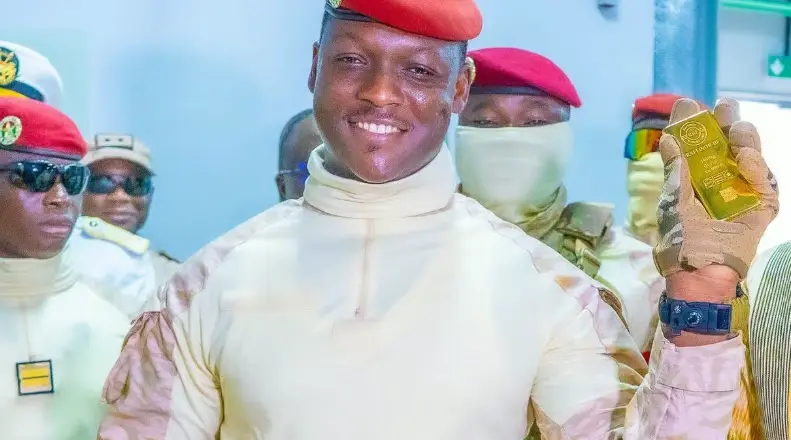
From Reuters video
Uagadugú, BURKINA FASO, AFRICA
Burkina Faso First Gold Refinery / Burkina Faso Primera Refinería de Oro
Burkina Faso opened its first national gold refinery on 28 September 2026, three months after breaking diplomatic ties with France. The goal: keep the value of its gold at home instead of shipping it abroad as raw material.
Burkina Faso inauguró el 28 de septiembre de 2026 su primera refinería nacional de oro, tres meses después de romper relaciones diplomáticas con Francia. El objetivo: que el valor de su oro se quede en casa en lugar de salir del país en bruto.
Read More / Leer
Burkina Faso inaugurated its first gold refinery on 28 September 2026 in Ouagadougou, in the presence of junta leader Captain Ibrahim Traoré. The presidency called it “a historic step in its quest for economic independence”.
Footage of the inauguration shows Traoré cutting the ribbon, touring the production lines and holding one of the first bars cast at the plant.
The plant, Raffinor-BF, can process 164 tonnes of gold a year, with plans to reach 515 tonnes. Construction began in late November 2023 and cost more than CFA 11 billion (about $20 million), financed by the state and domestic private investors. It is expected to create 100 direct and 5,000 indirect jobs.
The figures matter. Burkina Faso is Africa’s third-largest gold producer, with about 94 tonnes in 2025. Until now, that gold left the country as raw material to be refined and valued elsewhere, mostly in Switzerland.
“Our ambition is no longer simply to be a country that extracts its raw materials and sends them abroad,” Traoré said. “We want the entire value chain to be based here.” Mining minister Yacouba Zabré Gouba was blunter: “This is the day we take back the keys to our own house.”
The refinery is part of a wider break with the old order. On 26 June 2026, Ouagadougou cut diplomatic relations with France, its former colonial ruler, accusing Paris of “neo-colonial ambitions”. Neighbouring Mali, also under military rule, is building its own refinery with Russian partners.
The challenges remain large. Much of the country’s gold comes from informal, artisanal mines, and jihadist violence limits state control over wide areas. Whether the refinery changes who profits from Burkinabè gold will depend on how much of that gold actually reaches it.
Burkina Faso inauguró el 28 de septiembre de 2026 en Uagadugú su primera refinería de oro, en presencia del líder de la junta militar, el capitán Ibrahim Traoré. La presidencia lo calificó de “paso histórico en su búsqueda de la independencia económica”.
Las imágenes de la inauguración muestran a Traoré cortando la cinta, recorriendo las líneas de producción y sosteniendo uno de los primeros lingotes fundidos en la planta.
La planta, Raffinor-BF, puede procesar 164 toneladas de oro al año, con planes de llegar a 515. Las obras comenzaron a finales de noviembre de 2023 y el coste supera los 11.000 millones de francos CFA (unos 20 millones de dólares), financiados por el Estado y por inversores privados nacionales. Se esperan 100 empleos directos y 5.000 indirectos.
Las cifras importan. Burkina Faso es el tercer productor de oro de África, con unas 94 toneladas en 2025. Hasta ahora, ese oro salía del país en bruto para ser refinado y valorizado en otros lugares, sobre todo en Suiza.
“Nuestra ambición ya no es ser simplemente un país que extrae sus materias primas y las envía al extranjero”, dijo Traoré. “Queremos que toda la cadena de valor esté aquí.” El ministro de Minas, Yacouba Zabré Gouba, fue más directo: “Hoy recuperamos las llaves de nuestra propia casa”.
La refinería forma parte de una ruptura más amplia con el viejo orden. El 26 de junio de 2026, Uagadugú rompió relaciones diplomáticas con Francia, su antigua potencia colonial, a la que acusó de “ambiciones neocoloniales”. El vecino Malí, también bajo gobierno militar, construye su propia refinería con socios rusos.
Los retos siguen siendo enormes. Gran parte del oro del país sale de minas informales y artesanales, y la violencia yihadista limita el control del Estado sobre amplias zonas. Que la refinería cambie quién se beneficia del oro burkinés dependerá de cuánto de ese oro llegue realmente a ella.
ANALYSIS / ANÁLISIS
20 September, 2026
2026

An oil refinery on fire following what Russian authorities say was a Ukrainian drone attack on Moscow, September 20, 2026 [Reuters]
Moscow, Russia & Northern Europe
Moscú, Rusia y Europa del Norte
Moscow Under Fire, Northern Europe on Alert / Moscú bajo el Fuego, el Norte de Europa en Alerta
On September 20, 2026 — the final day of Russia’s parliamentary elections — Ukraine launched its largest-ever drone attack on Moscow, with more than 1,000 drones fired overnight and hundreds aimed directly at the capital. It’s the kind of strike that raises an uncomfortable question: what happens if Russia retaliates in kind? Across the Nordic and Baltic states, the answer to that question has already been rehearsed — down to body bags and mock funerals.
El 20 de septiembre de 2026 —último día de las elecciones parlamentarias rusas— Ucrania lanzó su mayor ataque con drones jamás realizado contra Moscú, con más de 1,000 drones disparados durante la noche, cientos de ellos dirigidos directamente a la capital. Es el tipo de ataque que plantea una pregunta incómoda: ¿qué pasa si Rusia responde de la misma forma? En los países nórdicos y bálticos, la respuesta a esa pregunta ya se ha ensayado — hasta con bolsas para cadáveres y funerales simulados.

Read More / Leer
The Attack on Moscow
Ukraine fired over 1,000 drones at Russia overnight into September 20, with Moscow Mayor Sergei Sobyanin describing it as the “largest ever” drone attack on the Russian capital — 450 drones were intercepted en route to Moscow alone. Russia’s Defense Ministry claimed it shot down 1,110 drones in total, the highest overnight figure it has ever reported. The Moscow Oil Refinery (Gazprom Neft) was damaged, along with a residential building in Kotelniki that forced a 400-person evacuation. At least two to three people were killed and 20 injured, including three children. All four of Moscow’s international airports briefly suspended flights.
The Timing Wasn’t Random
The attack landed on the final day of Russia’s three-day parliamentary elections. Ukrainian President Volodymyr Zelensky praised the strike publicly, saying the targeted facilities “bring in billions of dollars that sustain the war machine” — without mentioning the election directly. Whether coincidence or message, the scale was unmistakable: nothing this large had hit Moscow before.
Finland: Europe’s Largest Civil Defense Drill Since WWII
Just weeks earlier, on September 2-3, Finland ran “Shelter 2026” in Kuopio — the largest civil defense exercise in Europe since the end of World War II. More than 2,000 conscripts, volunteers, and students rehearsed sheltering from missile strikes, cyberattacks, and infrastructure sabotage. One of Kuopio’s shelters, carved into rock and normally a sports facility, can hold 7,000 people and is built to withstand conventional, nuclear, and biological threats. Finland has roughly 50,000 civil defense shelters nationwide — enough to protect most of its population. Russian military aircraft have entered Finnish airspace multiple times in 2026, most recently in August.
Sweden: Planning Where to Bury the Dead
Sweden’s preparations go further still. Under the country’s Burial Act, local burial associations are legally required to secure enough land to bury roughly 5% of their parish’s population in the event of war. The city of Gothenburg is currently seeking 10 additional acres of land to handle up to 30,000 wartime deaths. In its “Aurora 26” exercise — Sweden’s largest military drill since the 1990s, involving 18,000 troops from 13 nations — the country staged a full mortuary drill: over 500 mannequins and body bags representing fallen soldiers, a priest performing last rites for fictional casualties, and cold-storage stress tests. The commanding officer told researchers: “I am proud to have been part of this.”
The tension turned concrete on September 16, when Russia’s FSB imposed a nighttime curfew along its border with Estonia near the city of Narva, barring people and vehicles from areas within 5 km of the border in the Slantsy and Kingisepp districts through September 26 — confirmed by open-source intelligence monitors tracking the region.
Days earlier, on September 14, Germany and Sweden launched Silver Wotan 2026, a bilateral exercise running through September 23 on the island of Gotland — roughly 300 km from Kaliningrad. Around 1,500 German and Swedish troops rehearsed the rapid reinforcement of the island, securing the port of Visby to move in coastal anti-ship missile systems. A Swedish operations commander described it as “not an ordinary exercise” — the forces were protecting the transport with live weapons.
The Baltics: Rearming at Record Speed
Estonia, Latvia, and Lithuania have all pledged defense budgets of 5% or more of GDP by 2026 — record highs for each country. All three withdrew from the Ottawa Treaty banning anti-personnel landmines in 2025, citing the need for “maximum defensive flexibility.” Lithuania will host a permanently stationed German brigade. The three countries are building a joint “Baltic Defence Line” of bunkers, anti-tank ditches, and fortifications along their borders with Russia and Belarus, hardening the Suwałki Gap — the narrow corridor NATO planners see as Russia’s most likely invasion route into the Baltics.
Spy Chiefs Sound the Alarm
Hours after the Moscow drone strike, European intelligence chiefs added another layer of concern. Latvia’s state security service director, Normunds Mežviets, said there were “no indications of an imminent attack,” but conceded Moscow was making preparations for “more decisive action” in Europe — though he couldn’t say whether that reflected concrete plans or a broader strategy to spread fear. Czech intelligence chief Michal Koudelka went further, warning Russia could attempt a limited incursion into NATO territory — through drone activity, a false-flag provocation, or something larger. Polish Prime Minister Donald Tusk suggested Moscow might be testing whether NATO’s Article 5 collective-defense guarantee is “more theoretical than practical,” an assessment French President Emmanuel Macron called credible.
The Connection
None of this preparation was caused by today’s drone attack — it’s been building for months, rooted in the wider war in Ukraine. But the scale of Sunday’s strike on Moscow is exactly the kind of event that tests whether that preparation was warranted. If Russia’s response escalates the conflict beyond Ukraine’s borders, the region watching most closely — and most ready — is the one that has already rehearsed the worst.
El Ataque a Moscú
Ucrania disparó más de 1,000 drones contra Rusia durante la noche hacia el 20 de septiembre, y el alcalde de Moscú, Sergei Sobyanin, lo describió como el ataque con drones “más grande jamás visto” contra la capital rusa —solo camino a Moscú se interceptaron 450 drones. El Ministerio de Defensa ruso afirmó haber derribado 1,110 drones en total, la cifra más alta que ha reportado nunca en una sola noche. La refinería de petróleo de Moscú (Gazprom Neft) resultó dañada, junto con un edificio residencial en Kotelniki que obligó a evacuar a 400 personas. Al menos dos o tres personas murieron y 20 resultaron heridas, incluidos tres niños. Los cuatro aeropuertos internacionales de Moscú suspendieron vuelos brevemente.
El Momento No Fue Casual
El ataque coincidió con el último día de las elecciones parlamentarias rusas, de tres días de duración. El presidente ucraniano Volodymyr Zelensky elogió públicamente el ataque, diciendo que las instalaciones atacadas “generan miles de millones de dólares que sostienen la máquina de guerra” —sin mencionar directamente las elecciones. Coincidencia o mensaje deliberado, la escala fue inconfundible: nada de este tamaño había golpeado Moscú antes.
Finlandia: El Mayor Simulacro de Defensa Civil de Europa Desde la Segunda Guerra Mundial
Apenas semanas antes, el 2-3 de septiembre, Finlandia realizó “Shelter 2026” en Kuopio —el mayor ejercicio de defensa civil en Europa desde el final de la Segunda Guerra Mundial. Más de 2,000 conscriptos, voluntarios y estudiantes ensayaron cómo refugiarse ante ataques con misiles, ciberataques y sabotaje de infraestructura. Uno de los refugios de Kuopio, excavado en roca y normalmente una instalación deportiva, puede albergar a 7,000 personas y está construido para resistir amenazas convencionales, nucleares y biológicas. Finlandia tiene aproximadamente 50,000 refugios de defensa civil en todo el país —suficientes para proteger a la mayor parte de su población. Aviones militares rusos han entrado en el espacio aéreo finlandés varias veces en 2026, la más reciente en agosto.
Suecia: Planificando Dónde Enterrar a los Muertos
Los preparativos de Suecia van aún más lejos. Bajo la Ley de Entierros del país, las asociaciones funerarias locales están legalmente obligadas a asegurar terreno suficiente para enterrar a aproximadamente el 5% de la población de su parroquia en caso de guerra. La ciudad de Gotemburgo busca actualmente 10 acres adicionales de terreno para poder gestionar hasta 30,000 muertes en tiempo de guerra. En su ejercicio “Aurora 26” —el mayor simulacro militar de Suecia desde los años 90, con 18,000 tropas de 13 países—, el país realizó un simulacro completo de morgue: más de 500 maniquíes y bolsas para cadáveres representando soldados caídos, un sacerdote dando los últimos ritos a bajas ficticias, y pruebas de estrés de cámaras frigoríficas. El oficial al mando dijo a los investigadores: “Estoy orgulloso de haber sido parte de esto.”
La tensión se volvió concreta el 16 de septiembre, cuando el FSB ruso impuso un toque de queda nocturno a lo largo de su frontera con Estonia cerca de la ciudad de Narva, prohibiendo la presencia de personas y vehículos en zonas a 5 km de la frontera en los distritos de Slantsy y Kingisepp hasta el 26 de septiembre —confirmado por monitores de inteligencia de fuentes abiertas que siguen la región.
Días antes, el 14 de septiembre, Alemania y Suecia lanzaron Silver Wotan 2026, un ejercicio bilateral que se extiende hasta el 23 de septiembre en la isla de Gotland —a unos 300 km de Kaliningrado. Cerca de 1,500 tropas alemanas y suecas ensayaron el refuerzo rápido de la isla, asegurando el puerto de Visby para trasladar sistemas de misiles antibuque costeros. Un comandante de operaciones sueco lo describió como “no un ejercicio ordinario” —las fuerzas protegían el transporte con armas reales.
Los Bálticos: Rearmándose a Velocidad Récord
Estonia, Letonia y Lituania se han comprometido a presupuestos de defensa del 5% o más del PIB para 2026 —cifras récord históricas para cada país. Los tres se retiraron del Tratado de Ottawa que prohíbe las minas antipersona en 2025, citando la necesidad de “máxima flexibilidad defensiva”. Lituania albergará una brigada alemana permanentemente estacionada. Los tres países están construyendo una “Línea de Defensa Báltica” conjunta de búnkeres, fosos antitanque y fortificaciones a lo largo de sus fronteras con Rusia y Bielorrusia, reforzando el Corredor de Suwałki —el estrecho pasillo que los planificadores de la OTAN consideran la ruta de invasión más probable de Rusia hacia los Bálticos.
Los Jefes de Inteligencia Dan la Voz de Alarma
Horas después del ataque con drones a Moscú, los jefes de inteligencia europeos añadieron otra capa de preocupación. El director del servicio de seguridad estatal de Letonia, Normunds Mežviets, dijo que “no hay indicios de un ataque inminente”, pero reconoció que Moscú se está preparando para una “acción más decisiva” en Europa —aunque no pudo precisar si eso refleja planes concretos o una estrategia más amplia para sembrar miedo. El jefe de inteligencia checo, Michal Koudelka, fue más allá, advirtiendo que Rusia podría intentar una incursión limitada en territorio de la OTAN —mediante actividad de drones, una provocación de falsa bandera, o algo mayor. El primer ministro polaco, Donald Tusk, sugirió que Moscú podría estar probando si la garantía de defensa colectiva del Artículo 5 de la OTAN es “más teórica que práctica”, una evaluación que el presidente francés Emmanuel Macron calificó de creíble.
La Conexión
Nada de esta preparación fue causada por el ataque con drones de hoy —lleva meses gestándose, arraigada en la guerra más amplia en Ucrania. Pero la escala del ataque de este domingo contra Moscú es exactamente el tipo de evento que pone a prueba si esa preparación estaba justificada. Si la respuesta rusa escala el conflicto más allá de las fronteras de Ucrania, la región que observa con más atención —y con más preparación— es la que ya ha ensayado lo peor.
ANALYSIS / ANÁLISIS
19 September, 2026
2026
The Victory That Wasn’t / La Victoria Que No Fué
At the end of February 2026, President Trump launched a war against Iran, claiming its nuclear program was two weeks from producing a weapon. By Day 9, U.S. Defense Secretary Pete Hegseth was promising an imminent “Iranian surrender.” By Day 14, he declared Iran’s military “destroyed” and “combat-ineffective.” Seven months later, the war hasn’t ended — and neither has the contradiction between “obliterated” and “two weeks away.”
A finales de febrero de 2026, el presidente Trump lanzó una guerra contra Irán, alegando que su programa nuclear estaba a dos semanas de producir un arma. Para el día 9, el Secretario de Defensa estadounidense Pete Hegseth prometía una “rendición iraní” inminente. Para el día 14, declaró al ejército de Irán “destruido” y “combat-ineficaz”. Siete meses después, la guerra no ha terminado —y tampoco la contradicción entre “obliterado” y “a dos semanas de distancia”.
Read More / Leer
The War Begins
Trump launched the war on Iran at the end of February 2026. By Day 9, appearing on 60 Minutes, Hegseth assured Americans of an imminent “Iranian surrender.” By Day 14 of the conflict, he stated flatly that Iran’s military had been “destroyed” and “made combat-ineffective.”
The Timeline That Doesn’t Add Up
Trump and Hegseth had claimed Operation Midnight Hammer “obliterated” Iran’s ability to build nuclear weapons. Yet the war itself began at the end of February with Trump claiming Iran was two weeks from a weapon — the justification for launching it in the first place. If the capability had already been destroyed, what triggered the war? Neither man has offered an answer that resolves it.
July 21: The Senate Stops Accepting the Story
Nearly five months into the war, on July 21, 2026, Senators Jon Ossoff and Kirsten Gillibrand confronted Hegseth during a Senate Appropriations Committee hearing — as the Pentagon requested up to $88 billion in additional funding, on top of $37.5 billion already spent. “On Day 14 of this conflict… you stated that Iran’s military had been ‘destroyed’ and ‘made combat-ineffective.’ Was that an accurate statement, yes or no?” Ossoff asked, repeating the question multiple times. Hegseth never answered yes or no. He also would not confirm whether his Day 9 surrender prediction still stood, saying instead: “What the American military has done with the Iranian military is a historic military defeat.”
Gillibrand Won’t Let It Go Either
Gillibrand pressed the same contradiction from a different angle: “The reason why [Americans] are so upset with you and this administration is because the words you have used in the past don’t add up… So, which is true? Was it obliterated, or wasn’t it? What’s the status?” Hegseth’s answer didn’t resolve it: “The nuclear sites under Midnight Hammer were obliterated, but Iranians foolishly continued to attempt to pursue nuclear capabilities.” He accused Gillibrand of trying to make “campaign commercials.” She hadn’t asked about commercials — she’d asked a yes-or-no question about whether the program was destroyed.
The Goalposts Move
Pressed again on whether “combat-ineffective for years to come” had held up, Hegseth shifted: Iran’s military had been set back “not just years but likely decades” — while conceding it still had “capability,” and that “combat-ineffective” never meant “absolute zero.”
Israel Didn’t Stop
Hours after the April 8 ceasefire was announced, Israel launched what it called its “most powerful attacks” on Lebanon, killing at least 357 people and wounding over 1,200 — the bloodiest day since Israel’s renewed war on Hezbollah began in March. Prime Minister Benjamin Netanyahu declared the ceasefire “does not bind Israel in Lebanon,” directly contradicting both Iran and Pakistan, the mediator who said the truce explicitly covered that front. The attacks continued through the year: a June 15 agreement known as the Islamabad Memorandum again included a Lebanon ceasefire, and Israel again struck “Hezbollah infrastructure” days later, accusing the group of violations. By year’s end, the broader Lebanon war had killed more than 4,000 people and displaced over a million.
The Human and Financial Cost
By the July hearing, American casualties in the region had climbed to 17 killed and over 100 wounded — including four servicemembers killed the weekend before the hearing itself. Senator Jack Reed noted separately that American families were “bearing the cost of a war they wanted nothing to do with,” pointing to rising fuel prices. Roughly 68 percent of Americans were reportedly frustrated with the war by this point.
Where Things Stand Today
As of September 21, 2026 — nearly seven months after the war began, and more than five months after Hegseth first declared Iran “destroyed” — the conflict has not ended. The Strait of Hormuz remained effectively closed for most of this period. In September, Iran-backed Houthi forces completed a takeover of Bab al-Mandeb, a second major shipping chokepoint, while Chinese and Russian vessels continued crossing unharmed under a standing arrangement. Hundreds of Iranian Revolutionary Guard officers were reported operating alongside Houthi forces in Yemen. None of it reads like a country rendered “combat-ineffective.”
Comienza la Guerra
Trump lanzó la guerra contra Irán a finales de febrero de 2026. Para el día 9, apareciendo en 60 Minutes, Hegseth aseguró a los estadounidenses una “rendición iraní” inminente. Para el día 14 del conflicto, afirmó sin rodeos que el ejército de Irán había sido “destruido” y “dejado combat-ineficaz”.
La Cronología Que No Cuadra
Trump y Hegseth habían afirmado que la Operación Midnight Hammer “obliteró” la capacidad de Irán de construir armas nucleares. Sin embargo, la guerra en sí comenzó a finales de febrero con Trump alegando que Irán estaba a dos semanas de tener un arma —la justificación para lanzarla en primer lugar. Si la capacidad ya había sido destruida, ¿qué desencadenó la guerra? Ninguno de los dos ha ofrecido una respuesta que resuelva esto.
21 de Julio: El Senado Deja de Aceptar la Historia
Casi cinco meses después de iniciada la guerra, el 21 de julio de 2026, los senadores Jon Ossoff y Kirsten Gillibrand confrontaron a Hegseth durante una audiencia del Comité de Asignaciones del Senado —mientras el Pentágono solicitaba hasta $88 mil millones adicionales, sumados a los $37.5 mil millones ya gastados. “En el día 14 de este conflicto… usted afirmó que el ejército de Irán había sido ‘destruido’ y ‘dejado combat-ineficaz’. ¿Fue esa una afirmación precisa, sí o no?” preguntó Ossoff, repitiendo la pregunta varias veces. Hegseth nunca respondió sí o no. Tampoco confirmó si su predicción de rendición del día 9 seguía en pie, diciendo en su lugar: “Lo que el ejército estadounidense le ha hecho al ejército iraní es una derrota militar histórica.”
Gillibrand Tampoco Lo Deja Pasar
Gillibrand presionó la misma contradicción desde otro ángulo: “La razón por la que [los estadounidenses] están tan molestos con usted y esta administración es porque las palabras que ha usado en el pasado no cuadran… Entonces, ¿qué es verdad? ¿Estaba obliterado o no lo estaba? ¿Cuál es el estatus?” La respuesta de Hegseth no lo resolvió: “Los sitios nucleares bajo Midnight Hammer fueron obliterados, pero los iraníes tontamente continuaron intentando conseguir capacidades nucleares.” Acusó a Gillibrand de intentar hacer “anuncios de campaña”. Ella no había preguntado sobre anuncios —había hecho una pregunta de sí o no sobre si el programa había sido destruido.
Los Objetivos Se Mueven
Presionado de nuevo sobre si “combat-ineficaz por años” se había sostenido, Hegseth cambió de postura: el ejército de Irán había retrocedido “no solo años sino probablemente décadas” —mientras admitía que todavía tenía “capacidad”, y que “combat-ineficaz” nunca significó “cero absoluto”.
Israel No Se Detuvo
Horas después de que se anunciara el alto el fuego del 8 de abril, Israel lanzó lo que llamó sus ataques “más poderosos” sobre Líbano, matando al menos a 357 personas y hiriendo a más de 1,200 —el día más sangriento desde que comenzó la guerra renovada de Israel contra Hezbollah en marzo. El primer ministro Benjamin Netanyahu declaró que el alto el fuego “no ataba a Israel en el Líbano”, contradiciendo directamente tanto a Irán como a Pakistán, el mediador que dijo que la tregua cubría explícitamente ese frente. Los ataques continuaron durante el año: un acuerdo del 15 de junio conocido como el Memorando de Islamabad incluyó de nuevo un alto el fuego en el Líbano, e Israel volvió a atacar “infraestructura de Hezbollah” días después, acusando al grupo de violaciones. Para fin de año, la guerra más amplia del Líbano había matado a más de 4,000 personas y desplazado a más de un millón.
El Coste Humano y Financiero
Para la audiencia de julio, las bajas estadounidenses en la región habían subido a 17 muertos y más de 100 heridos —incluidos cuatro militares muertos el fin de semana antes de la propia audiencia. El senador Jack Reed señaló por separado que las familias estadounidenses estaban “cargando con el coste de una guerra que no querían”. Aproximadamente el 68 por ciento de los estadounidenses estaban, según se reportó, frustrados con la guerra para ese momento.
Dónde Están las Cosas Hoy
A fecha del 21 de septiembre de 2026 —casi siete meses después de que comenzara la guerra, y más de cinco meses después de que Hegseth declarara por primera vez a Irán “destruido”— el conflicto no ha terminado. El Estrecho de Ormuz permaneció efectivamente cerrado durante la mayor parte de este período. En septiembre, fuerzas hutíes respaldadas por Irán completaron la toma de Bab al-Mandeb, un segundo punto crítico de transporte marítimo, mientras buques chinos y rusos seguían cruzando sin ser atacados bajo un acuerdo vigente. Se reportó que cientos de oficiales de la Guardia Revolucionaria iraní operaban junto a las fuerzas hutíes en Yemen. Nada de esto se lee como un país dejado “combat-ineficaz”.
UN REPORT / COMMISSION OF INQUIRY
16 September, 2025
2025
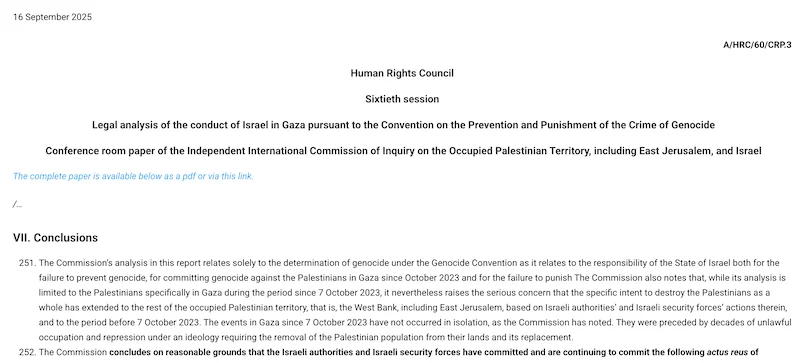
A/HRC/60/CRP.3 — United Nations Human Rights Council, 60th session
Geneva, Switzerland — Gaza Strip
Ginebra, Suiza — Franja de Gaza
2025: The Word Is Genocide / La Palabra es Genocidio
On 16 September 2025, the UN Independent International Commission of Inquiry on the Occupied Palestinian Territory and Israel, chaired by former UN High Commissioner for Human Rights Navi Pillay, published its legal analysis of Israel’s conduct in Gaza between 7 October 2023 and 31 July 2025. Its conclusion: “Israel is responsible for the commission of genocide in Gaza.” It was the first time a UN investigative body formally reached that finding.
El 16 de septiembre de 2025, la Comisión Internacional Independiente de Investigación de la ONU sobre el Territorio Palestino Ocupado e Israel, presidida por la ex Alta Comisionada de la ONU para los Derechos Humanos Navi Pillay, publicó su análisis jurídico de la conducta de Israel en Gaza entre el 7 de octubre de 2023 y el 31 de julio de 2025. Su conclusión: Israel es responsable de la comisión de genocidio en Gaza. Fue la primera vez que un órgano de investigación de la ONU llegaba formalmente a esa conclusión.
Read More / Leer
The four acts (Art. II, 1948 Genocide Convention): killing members of the group; causing serious bodily or mental harm; deliberately inflicting conditions of life calculated to bring about the group’s physical destruction; imposing measures intended to prevent births.
The conduct examined: a siege blocking humanitarian aid and leading to starvation; destruction of the health and education systems; direct targeting of children; attacks on religious and cultural sites; sexual and gender-based violence; disregard of provisional measures ordered by the International Court of Justice.
Intent (§254): applying the ICJ standard from Bosnia v. Serbia, the Commission treats statements by Israeli officials as direct evidence of genocidal intent, and finds that genocidal intent is “the only reasonable inference” from the pattern of conduct.
Incitement (§253): President Isaac Herzog, Prime Minister Benjamin Netanyahu and former Defence Minister Yoav Gallant “have incited the commission of genocide.” Statements by Itamar Ben-Gvir and Bezalel Smotrich should also be assessed.
State responsibility (§255): the State of Israel bears responsibility for committing genocide, failing to prevent it and failing to punish it.
Recommendations (§256–258): end the genocide, lift the siege and allow unimpeded aid; Member States to halt arms transfers that could be used in genocidal acts; the ICC Prosecutor to investigate.
Context: a Commission of Inquiry is a body of independent experts mandated by the UN Human Rights Council (Resolution S-30/1, 2021), not a court. The judicial determination rests with the International Court of Justice, where South Africa v. Israel remains open. Israel did not cooperate with the Commission and rejected the report.
Los cuatro actos (Art. II, Convención contra el Genocidio de 1948): matanza de miembros del grupo; lesión grave a la integridad física o mental; sometimiento intencional a condiciones de existencia que acarreen su destrucción física; medidas destinadas a impedir los nacimientos.
La conducta examinada: un asedio que bloqueó la ayuda humanitaria y provocó hambruna; destrucción de los sistemas de salud y educación; ataques directos contra niños; ataques contra lugares religiosos y culturales; violencia sexual y de género; incumplimiento de las medidas provisionales ordenadas por la Corte Internacional de Justicia.
Intención (§254): aplicando el criterio de la CIJ en Bosnia contra Serbia, la Comisión considera las declaraciones de autoridades israelíes como prueba directa de intención genocida, y concluye que esa intención es “la única inferencia razonable” del patrón de conducta.
Incitación (§253): el presidente Isaac Herzog, el primer ministro Benjamin Netanyahu y el exministro de Defensa Yoav Gallant “han incitado a la comisión de genocidio”. Las declaraciones de Itamar Ben-Gvir y Bezalel Smotrich también deben evaluarse.
Responsabilidad del Estado (§255): el Estado de Israel es responsable de cometer genocidio, de no prevenirlo y de no castigarlo.
Recomendaciones (§256–258): poner fin al genocidio, levantar el asedio y permitir la ayuda sin trabas; que los Estados miembros detengan las transferencias de armas que puedan usarse en actos genocidas; que el Fiscal de la CPI investigue.
Contexto: una Comisión de Investigación es un órgano de expertos independientes con mandato del Consejo de Derechos Humanos de la ONU (Resolución S-30/1, 2021), no un tribunal. La determinación judicial corresponde a la Corte Internacional de Justicia, donde el caso Sudáfrica contra Israel sigue abierto. Israel no cooperó con la Comisión y rechazó el informe.
ANALYSIS / ANÁLISIS
11 September, 2026
2026
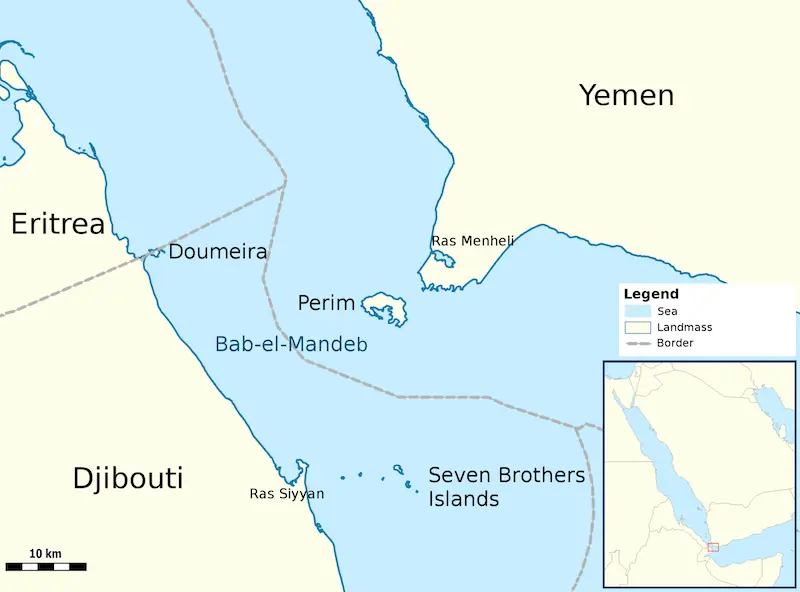
Bab al-Mandeb Strait
Bab al-Mandeb Strait
Estrecho de Bab al-Mandeb
Bab al-Mandeb: The World’s Second Chokepoint / Bab al-Mandeb: El Segundo Estrangulamiento del Mundo
On September 11-12, 2026, Iran-backed Houthi forces completed their takeover of the Yemeni side of the Bab al-Mandeb Strait — one of the world’s most critical shipping chokepoints — just as the Strait of Hormuz remains effectively closed by the US-Iran war. For the first time in memory, two of the world’s most important oil arteries are strained simultaneously.
El 11-12 de septiembre de 2026, fuerzas hutíes respaldadas por Irán completaron la toma del lado yemení del Estrecho de Bab al-Mandeb —uno de los puntos de estrangulamiento marítimo más críticos del mundo— justo cuando el Estrecho de Ormuz permanece efectivamente cerrado por la guerra EEUU-Irán. Por primera vez en memoria reciente, dos de las arterias petroleras más importantes del mundo están tensionadas a la vez.
Read More / Leer
What Happened
On September 11-12, 2026, Iran-backed Houthi forces completed their takeover of the Yemeni side of the Bab al-Mandeb Strait, capturing the strategic island of Perim (Mayyun) — which splits the strait at its narrowest point — along with the Red Sea port city of Mokha and the Hanish Islands to the north. Vessel traffic through the strait had already fallen roughly 24% following an earlier blockade in July.
Why It Matters
Bab al-Mandeb handles roughly 12% of global seaborne trade and links the Red Sea (via the Suez Canal) to the Indian Ocean — a route connecting Asia and Europe. Its sudden importance has spiked because the Strait of Hormuz, which normally carries about 20% of the world’s oil, has been effectively closed since the US-Iran war began in February 2026. Saudi Arabia had increasingly relied on Bab al-Mandeb as its alternative export route — a lifeline now also under threat.
The Cost of Closure
When Houthi attacks disrupted the same route during 2023-24, the consequences were severe: Suez Canal traffic dropped over 50% at peak disruption, ships rerouted around Africa’s Cape of Good Hope adding 10-14 days per voyage, freight costs surged, and insurance premiums for vessels more than doubled. Analysts warn a repeat — layered on top of the Hormuz closure — could be far more severe this time, with two critical chokepoints strained simultaneously for the first time in memory.
Who’s Involved
US officials told CNN that hundreds of Iranian Revolutionary Guard officers are reportedly operating alongside Houthi forces in Yemen, with the stated aim of opening a second front in the US-Iran conflict. The Houthis have publicly stated their blockade targets vessels linked to Saudi Arabia specifically, while explicitly sparing others — a calculated strategy, not a blanket closure.
China and Russia’s Position
Chinese-language reporting reveals a detail largely absent from Western coverage: at least four Chinese oil tankers carrying Saudi crude — including two supertankers loaded with 4 million barrels combined — have crossed Bab al-Mandeb unharmed since the blockade began. According to Reuters (cited in Chinese media) and a Russian diplomat interviewed by Sputnik, the Houthis have maintained a standing arrangement since 2024 exempting Chinese and Russian vessels from attack, for both political and pragmatic reasons.
China’s stake in the region is concrete: its only overseas military base sits directly across the strait in Djibouti, alongside the Chinese-operated Doraleh port, paying $20 million a year for the privilege. Chinese analysts draw an explicit parallel between the Houthi strategy here and Iran’s approach in Hormuz — “don’t fully close it, but make everyone answer to you.”
What the US Has Gained
Six months into the broader US-Iran war, independent analysis presents a stark assessment: while US and Israeli strikes achieved real tactical success — degrading Iran’s missile arsenal, naval capacity, and killing much of its leadership — several scholars argue the conflict has been a strategic failure for Washington. The war demonstrated that Iran could survive a full-scale US assault, and crucially, proved that targeting maritime chokepoints is an extremely effective, low-cost asymmetric strategy — a lesson the Houthis now appear to be applying at Bab al-Mandeb. Reopening the Strait of Hormuz, ironically, was not among Washington’s original objectives — it was added only after Iran successfully closed it.
Qué Ha Pasado
El 11-12 de septiembre de 2026, fuerzas hutíes respaldadas por Irán completaron la toma del lado yemení del Estrecho de Bab al-Mandeb, capturando la isla estratégica de Perim (Mayyun) —que divide el estrecho en su punto más estrecho— junto con la ciudad portuaria de Mokha y las Islas Hanish al norte. El tráfico de buques ya había caído un 24% tras un bloqueo previo en julio.
Por Qué Importa
Bab al-Mandeb maneja aproximadamente el 12% del comercio marítimo mundial y conecta el Mar Rojo (vía el Canal de Suez) con el Océano Índico — una ruta que une Asia y Europa. Su importancia repentina se ha disparado porque el Estrecho de Ormuz, que normalmente transporta cerca del 20% del petróleo mundial, está efectivamente cerrado desde que comenzó la guerra EEUU-Irán en febrero de 2026. Arabia Saudí dependía cada vez más de Bab al-Mandeb como ruta alternativa de exportación — un salvavidas ahora también amenazado.
El Coste de un Cierre
Cuando los ataques hutíes interrumpieron esta misma ruta en 2023-24, las consecuencias fueron severas: el tráfico del Canal de Suez cayó más del 50% en el punto álgido, los buques rodearon África vía el Cabo de Buena Esperanza añadiendo 10-14 días por viaje, los costes de flete se dispararon, y las primas de seguro para los barcos más que se duplicaron. Los analistas advierten que una repetición —sumada al cierre de Ormuz— podría ser mucho más grave esta vez, con dos puntos críticos de estrangulamiento tensionados simultáneamente por primera vez en memoria reciente.
Quiénes Están Implicados
Funcionarios estadounidenses dijeron a CNN que cientos de oficiales de la Guardia Revolucionaria iraní estarían operando junto a las fuerzas hutíes en Yemen, con el objetivo declarado de abrir un segundo frente en el conflicto EEUU-Irán. Los hutíes han declarado públicamente que su bloqueo apunta específicamente a buques vinculados con Arabia Saudí, mientras eximen explícitamente a otros — una estrategia calculada, no un cierre total.
La Posición de China y Rusia
Informes en chino revelan un detalle en gran parte ausente de la cobertura occidental: al menos cuatro petroleros chinos cargados con crudo saudí —incluyendo dos superpetroleros con 4 millones de barriles combinados— han cruzado Bab al-Mandeb sin ser atacados desde que comenzó el bloqueo. Según Reuters (citado en medios chinos) y un diplomático ruso entrevistado por Sputnik, los hutíes mantienen un acuerdo vigente desde 2024 que exime a los buques chinos y rusos de los ataques, por motivos tanto políticos como pragmáticos.
El interés de China en la región es concreto: su única base militar en el extranjero está justo enfrente del estrecho, en Djibouti, junto al puerto de Doraleh que opera China, pagando $20 millones anuales por el privilegio. Analistas chinos trazan un paralelismo explícito entre la estrategia hutí aquí y el enfoque iraní en Ormuz — “no cerrarlo del todo, pero que todos tengan que rendirte cuentas.”
Qué Ha Ganado EEUU
Seis meses después del inicio de la guerra EEUU-Irán, análisis independientes presentan una evaluación contundente: aunque los ataques de EEUU e Israel lograron un éxito táctico real —degradando el arsenal de misiles y la capacidad naval iraní, y matando a gran parte de su liderazgo—, varios académicos sostienen que el conflicto ha sido un fracaso estratégico para Washington. La guerra demostró que Irán podía sobrevivir a un ataque estadounidense a gran escala, y de forma crucial, probó que atacar puntos de estrangulamiento marítimo es una estrategia asimétrica extremadamente efectiva y de bajo coste — una lección que los hutíes parecen estar aplicando ahora en Bab al-Mandeb. Reabrir el Estrecho de Ormuz, irónicamente, no estaba entre los objetivos originales de Washington — se añadió solo después de que Irán lo cerrara con éxito.
SOCIAL MEDIA / REDES SOCIALES
7 September, 2026
2026
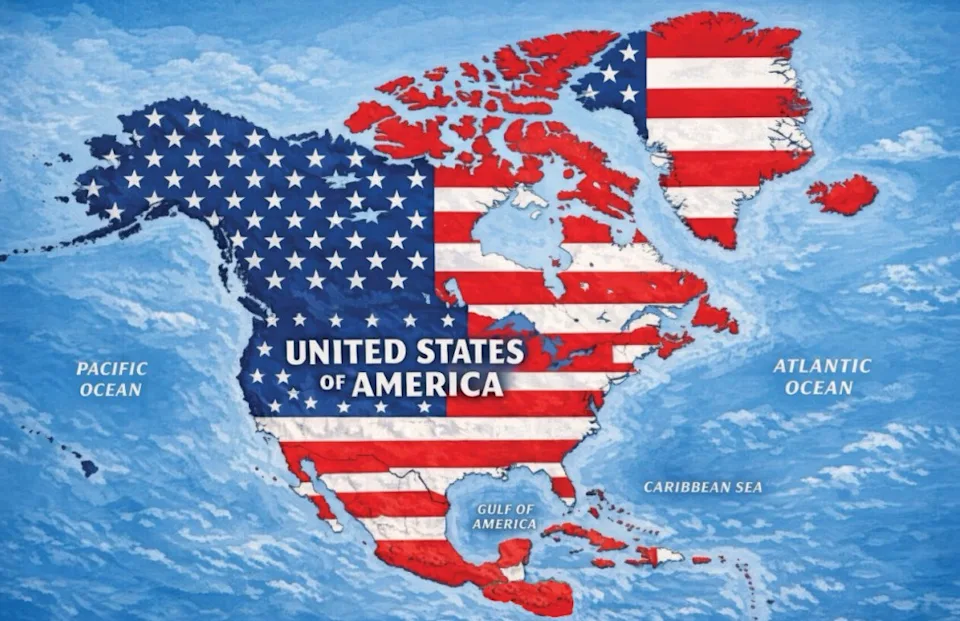
The AI-generated map that President Donald Trump posted to social media, Truth Social, on September 7 showing the United States encompassing most of North America.
USA, Donald Trump, Truth Social App
EEUU, Donald Trump, Truth Social App
The Map: Entitlement Drawn in Stars and Stripes/El Mapa: El Entitlement Dibujado en Barras y Estrellas
On Labor Day, September 7, 2026, President Trump posted a map on Truth Social with the American flag draped over Canada, Mexico, Greenland, Cuba, and most of Central America and the Caribbean. No explanation was given. It wasn’t a policy proposal — it was a display of entitlement, from a man a civil jury already found liable for sexual abuse, whose name keeps surfacing in connection to Jeffrey Epstein.
El Día del Trabajo, 7 de septiembre de 2026, el presidente Trump publicó un mapa en Truth Social con la bandera estadounidense cubriendo Canadá, México, Groenlandia, Cuba, y la mayor parte de Centroamérica y el Caribe. No se dio ninguna explicación. No era una propuesta de política —era una exhibición de sentido de derecho, por parte de un hombre a quien un jurado civil ya declaró responsable de abuso sexual, y cuyo nombre sigue apareciendo en conexión con Jeffrey Epstein.
Read More / Leer
What the Map Showed
The image depicted the United States, Canada, Mexico, part of Central America, Greenland, Iceland, and Caribbean islands including Cuba, Jamaica, and French territories like St. Barts, Guadeloupe, and Martinique — all covered by the American flag, the entire landmass labeled “United States of America.” The White House’s official account reposted it on X without comment.
Part of a Pattern, Not a One-Off
The day before, Trump had shared an image relabeling New Mexico as “New America,” crossing out “Mexico.” In August, he signed an order renaming Lake Ontario to “Lake America.” He has repeatedly floated making Canada the “51st state,” and pushed for U.S. control of Greenland and the Panama Canal. He proposed invading Venezuela — and his administration went further than rhetoric, removing President Nicolás Maduro from power as part of “Operation Absolute Resolve,” installing acting president Delcy Rodríguez, now seen as far more accommodating to U.S. interests.
Sovereignty Treated as an Afterthought
Every territory on that map belongs to a country with its own government, its own people, its own history. Canada is a G7 nation. Mexico has a population of over 128 million. The Caribbean nations shown — Cuba, Jamaica, the French overseas territories — are home to millions who owe no allegiance to Washington. Posting a map that erases all of it with a single flag, on a national holiday, with no policy attached, isn’t strategy. It’s the visual equivalent of a shrug: this is mine if I want it.
The Man Behind the Map
This is the same president a civil jury found liable for sexually abusing E. Jean Carroll in 2023, and liable again for defaming her when he denied it — verdicts totaling $88.3 million, both upheld on appeal, with the Supreme Court declining to hear further challenges. His name has appeared repeatedly in flight logs, court documents, and released files connected to Jeffrey Epstein’s network, alongside many other prominent figures — connections that remain, in various respects, still unresolved in the public record.
The Common Thread
A map claiming what isn’t his. A verdict for taking what wasn’t his to take. A name that keeps surfacing near a convicted trafficker’s client list. None of these are the same event, and none should be flattened into a single story. But together, they describe the same posture toward boundaries — other people’s countries, other people’s bodies, other people’s secrets — treated as things to claim, not respect.
Lo Que Mostraba el Mapa
La imagen mostraba a Estados Unidos, Canadá, México, parte de Centroamérica, Groenlandia, Islandia, e islas del Caribe incluyendo Cuba, Jamaica, y territorios franceses como St. Barts, Guadalupe y Martinica —todos cubiertos por la bandera estadounidense, con toda la masa terrestre etiquetada como “United States of America”. La cuenta oficial de la Casa Blanca lo republicó en X sin comentario.
Parte de un Patrón, No un Hecho Aislado
El día anterior, Trump había compartido una imagen renombrando Nuevo México como “New America”, tachando “Mexico”. En agosto, firmó una orden renombrando el Lago Ontario como “Lake America”. Ha planteado repetidamente convertir a Canadá en el “estado 51”, e impulsado el control estadounidense de Groenlandia y el Canal de Panamá. Propuso invadir Venezuela —y su administración fue más allá de la retórica, removiendo al presidente Nicolás Maduro del poder como parte de la “Operación Absolute Resolve”, instalando a la presidenta interina Delcy Rodríguez, ahora vista como mucho más favorable a los intereses de EEUU.
La Soberanía Tratada como un Detalle Menor
Cada territorio en ese mapa pertenece a un país con su propio gobierno, su propia gente, su propia historia. Canadá es una nación del G7. México tiene una población de más de 128 millones. Las naciones caribeñas mostradas —Cuba, Jamaica, los territorios franceses de ultramar— son hogar de millones que no deben ninguna lealtad a Washington. Publicar un mapa que borra todo eso con una sola bandera, en un día festivo nacional, sin ninguna política asociada, no es estrategia. Es el equivalente visual de un encogimiento de hombros: esto es mío si lo quiero.
El Hombre Detrás del Mapa
Este es el mismo presidente a quien un jurado civil declaró responsable de abusar sexualmente de E. Jean Carroll en 2023, y responsable de nuevo por difamarla.
DECLASSIFIED STATEMENTS & DOCS / DECLARACIONES Y DOCUMENTOS DESCLASIFICADOS
30 July, 2026
2026
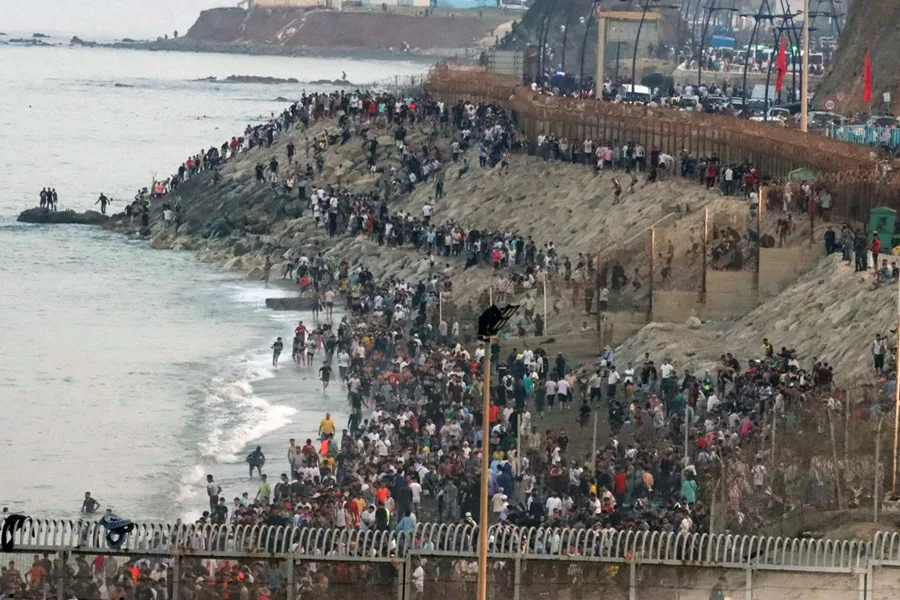
Ceuta, 30-31 July 2026. Over 50,000 people cross in under 48 hours — more than half the city’s population.” / “Ceuta, 29-30 de julio de 2026. Más de 50.000 personas cruzan en menos de 48 horas — más de la mitad de la población de la ciudad.” Credit: EFE/Reduan Dris
Ceuta, Spain — Washington, D.C. — Rabat
Ceuta, España — Washington, D.C. — Rabat
CEUTA: Mass Crossing — The US Committee Wrote It First / CEUTA: Cruce Masivo — El Comité del Congreso de EEUU Lo Escribió Primero
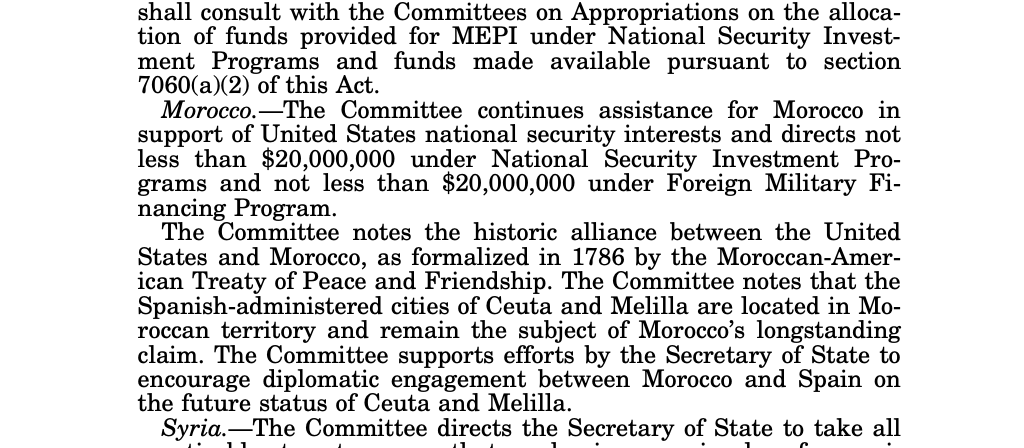
On April 30, 2026, a U.S. House of Representatives committee report described Ceuta and Melilla — Spanish cities since 1580 and 1497 — as located “in Moroccan territory,” and directed the Secretary of State to encourage talks on their “future status.” Three months later, over 50,000 people crossed from Morocco into Ceuta in under 48 hours, in the largest uncontrolled border crossing Europe has recorded. Spain’s own police unions say Moroccan authorities did nothing to stop it. This is the paper trail, in the order it happened.
El 30 de abril de 2026, un informe de un comité de la Cámara de Representantes del Congreso de Estados Unidos describió Ceuta y Melilla — ciudades españolas desde 1580 y 1497 — como situadas “en territorio marroquí”, y encargó al Secretario de Estado que fomentara conversaciones sobre su “futuro estatus”. Tres meses después, más de 50.000 personas cruzaron desde Marruecos a Ceuta en menos de 48 horas, el mayor cruce fronterizo incontrolado registrado en Europa. Los propios sindicatos policiales españoles dicen que las autoridades marroquíes no hicieron nada por impedirlo. Este es el rastro documental, en el orden en que ocurrió.
Read More / Leer
Older Than the Claim
Ceuta’s history runs through Phoenician and Carthaginian trading posts, then a Roman city — Septem Fratres, named for the seven hills surrounding it — passed from Rome to Byzantine hands, then to the Visigoths. The 711 Muslim conquest ended Visigothic rule; Portugal took the city in 1415. In 1578, Portugal’s King Sebastian died at the Battle of Alcácer Quibir without a direct heir. Philip II of Spain — himself the son of a Portuguese princess, Isabella of Portugal — claimed the Portuguese throne through that bloodline and was proclaimed King of Portugal in 1580, bringing Ceuta under the Spanish crown as part of the Iberian Union.
When Portugal restored its independence in 1640, nearly the entire Portuguese empire went with it — except Ceuta, which chose, by its own decision, to remain with Spain. That choice was formalized by the 1668 Treaty of Lisbon. Melilla has been Spanish since 1497, without interruption. Morocco, as an independent state, was founded in 1956 — 376 years after Ceuta first came under the Spanish crown, and 459 years after Melilla did. Neither city is listed by the UN as a non-self-governing territory.
The Numbers
Over 50,000 people crossed from Morocco into Ceuta between Thursday and Friday — more than half the city’s registered population of roughly 84,000 — in under 48 hours. At least 41 deaths have been confirmed; roughly 25,000 people have already been returned to Morocco under an accelerated repatriation agreement. Every figure in this crisis has moved within hours of being reported. The previous record, in May 2021, saw 6,000–12,000 crossings in two days.
The Paper Trail
April 30, 2026 — The House Committee on Appropriations, in Report 119-631 accompanying the National Security, Department of State, and Related Programs Appropriations Bill for 2027, submitted by Rep. Mario Díaz-Balart, states: “The Committee notes the Spanish-administered cities of Ceuta and Melilla are located in Moroccan territory and remain the subject of Morocco’s longstanding claim… The Committee supports efforts by the Secretary of State to encourage diplomatic engagement between Morocco and Spain on the future status of Ceuta and Melilla.”
April 1, 2026 — Díaz-Balart, in an interview with El Español, said Ceuta and Melilla “are not in the geographic territory of Spain” but “in the territory of Morocco,” and that their fate “is established, negotiated, and discussed between friends and allies.”
March 12, 2026 — Michael Rubin, a senior fellow at the American Enterprise Institute and former Pentagon official, wrote in the Middle East Forum that Trump and Secretary of State Marco Rubio “should formally recognize Ceuta and Melilla as occupied Moroccan territory.”
March 16, 2026 — Four days later, Rubin went further: invoking the 1975 Green March, he called on Morocco to send unarmed civilians into Ceuta and Melilla, arguing NATO’s Article 6 does not cover territory south of the Tropic of Cancer.
April 2026 — Amine Ayoub, a Middle East Forum fellow, wrote in Israel’s Ynet that helping Morocco “recover Ceuta and Melilla” would “punish a NATO member that has repeatedly chosen obstruction over partnership at the alliance’s most critical juncture,” calling it “strategic investment in the partner that, across the Strait of Gibraltar, holds the key to one of the world’s most vital maritime chokepoints.” That same month, Israel’s ambassador in Madrid, Dana Erlich, denied the Israeli government was considering supporting Morocco’s claim, saying it was not among the Netanyahu government’s priorities.
July 2026 — At the NATO summit in Ankara, President Trump called Spain “not a very good NATO member,” and, referencing the Spanish-American War: “They will learn soon after they relinquish their grip on Cuba and Guam, the Philippines and Puerto Rico, and they were all ours. We got them all. And speaking of Cuba… it’s coming our way.”
August 1, 2026 — As the crossing dominated headlines, Rep. Thomas Massie (R-KY) — a Republican and vocal critic of the administration’s Iran policy — wrote on X: “Don’t fall for the fake Fox/GOP outrage. Two weeks ago the House passed a bill that greenlighted the transfer of Spanish territory to Morocco. Every Republican except me voted for it, but now THEY are acting shocked at the invasion.” He was referring to House Report 119-631, above; the report is a non-binding foreign-policy recommendation attached to a spending bill, not a legal transfer mechanism — Congress cannot transfer a sovereign nation’s territory. Massie’s framing overstates the report’s legal effect. What it does not overstate: every Republican member but one voted for the underlying bill.
August 1, 2026 — The same day, Israel’s ambassador to the United Nations, Danny Danon, wrote on X after Spain declared an emergency in Ceuta: “Spain, which never misses an opportunity to lecture Israel, has declared a state of emergency in Ceuta following the crisis over its immigration policy” — adding that Spain should “explain to the world why it still maintains colonial enclaves in Africa” before criticizing Israel.
Recirculated this week — A 2019 post by Yair Netanyahu, the Israeli prime minister’s eldest son, resurfaced widely: “Dear Arabs and Muslims. Want to free occupied Arab Islamic lands? Here’s a good start!” — attached to a map of Ceuta, Melilla, and Spain’s other North African territories. Originally posted May 25, 2019, on his personal account; not an Israeli government statement.
The Strait
Ceuta sits at the eastern mouth of the Strait of Gibraltar, the chokepoint for roughly 100,000 vessels a year. This week’s crisis disrupted Operación Paso del Estrecho, the annual summer transit of millions of Moroccan-origin residents of Europe traveling home, at its seasonal peak.
Morocco’s Border: Documented Passivity
Jupol, Spain’s largest police union, denounced the “absolute passivity” of Moroccan authorities: “The Moroccan authorities are doing absolutely nothing to prevent this illegal access to Spanish territory” — calling it a “hybrid warfare pressure strategy.” The Sindicato Unificado de Policía (SUP) said Morocco “is no longer holding anyone back.” Journalist Ignacio Cembrero reported that reaching the border jetty requires passing lines of police and auxiliary forces that had “evidently let them through.”
Madrid’s Response
The government deployed the Armed Forces to support the Civil Guard and PM Pedro Sánchez visited Ceuta with Interior Minister Grande-Marlaska — but refused to declare a national emergency, despite a unanimous request from Ceuta’s own cross-party assembly, including the governing party’s local branch. That assembly later unanimously censured “the passive attitude of the Sánchez government.”
The Question the Record Leaves Open
A House committee wrote, in writing, that two Spanish cities sit on “Moroccan territory” and asked the State Department to open talks on their future. Three months later, tens of thousands of people crossed into those same cities in under two days, unopposed by the authorities meant to stop them. The Committee did not order the crossing. Nothing in this record proves that it did. But the record does not require that proof to be read in the order it happened.
thorities meant to stop them. The Committee did not order the crossing. Nothing in this record proves that it did. But the record does not require that proof to be read in the order it happened.Más Antiguas Que la Reclamación
La historia de Ceuta pasa por asentamientos comerciales fenicios y cartagineses, luego una ciudad romana — Septem Fratres, llamada así por las siete colinas que la rodean — que pasó de Roma a manos bizantinas, y de estas a los visigodos. La conquista musulmana de 711 puso fin al dominio visigodo; Portugal tomó la ciudad en 1415. En 1578, el rey Sebastián de Portugal murió en la batalla de Alcazarquivir sin heredero directo. Felipe II de España — hijo, a su vez, de una princesa portuguesa, Isabel de Portugal — reclamó el trono portugués por ese linaje y fue proclamado Rey de Portugal en 1580, incorporando Ceuta a la corona española como parte de la Unión Ibérica.
Cuando Portugal restauró su independencia en 1640, prácticamente todo el imperio portugués se fue con ella — salvo Ceuta, que decidió por voluntad propia permanecer con España. Esa decisión se formalizó con el Tratado de Lisboa de 1668. Melilla es española desde 1497, sin interrupción. Marruecos, como estado independiente, se fundó en 1956 — 376 años después de que Ceuta pasara por primera vez a la corona española, y 459 años después en el caso de Melilla. Ninguna de las dos ciudades figura en la lista de la ONU de territorios no autónomos.
Los Números
Más de 50.000 personas cruzaron desde Marruecos a Ceuta entre el jueves y el viernes — más de la mitad de la población censada de la ciudad, unos 84.000 habitantes — en menos de 48 horas. Se han confirmado al menos 41 muertos; unas 25.000 personas ya han sido devueltas a Marruecos bajo un acuerdo de repatriación acelerada. Cada cifra de esta crisis se ha movido en cuestión de horas. El récord anterior, en mayo de 2021, fue de 6.000 a 12.000 cruces en dos días.
El Rastro Documental
30 de abril de 2026 — El Comité de Apropiaciones de la Cámara de Representantes del Congreso de Estados Unidos, en el Informe 119-631 que acompaña a la ley de apropiaciones de Seguridad Nacional y Departamento de Estado para 2027, presentado por el representante estadounidense Mario Díaz-Balart, afirma: “El Comité señala que las ciudades administradas por España de Ceuta y Melilla están ubicadas en territorio marroquí y siguen siendo objeto de la reclamación histórica de Marruecos… El Comité apoya los esfuerzos del Secretario de Estado para fomentar el diálogo diplomático entre Marruecos y España sobre el futuro estatus de Ceuta y Melilla.”
1 de abril de 2026 — Díaz-Balart, en una entrevista con El Español, dijo que Ceuta y Melilla “no están en el territorio geográfico de España” sino “en territorio de Marruecos”, y que su destino “se establece, negocia y discute entre amigos y aliados.”
12 de marzo de 2026 — Michael Rubin, investigador principal del American Enterprise Institute y ex funcionario del Pentágono, escribió en Middle East Forum que Trump y el Secretario de Estado Marco Rubio “deberían reconocer formalmente Ceuta y Melilla como territorio marroquí ocupado.”
16 de marzo de 2026 — Cuatro días después, Rubin fue más allá: invocando la Marcha Verde de 1975, pidió a Marruecos que enviara civiles desarmados a Ceuta y Melilla, argumentando que el Artículo 6 de la OTAN no cubre territorio al sur del Trópico de Cáncer.
Abril de 2026 — Amine Ayoub, colaborador del Middle East Forum, escribió en el Ynet israelí que ayudar a Marruecos a “recuperar Ceuta y Melilla” serviría para “castigar a un miembro de la OTAN que ha elegido repetidamente el obstruccionismo sobre la colaboración en el momento más crítico de la alianza”, calificándolo de “inversión estratégica en el socio que, al otro lado del Estrecho de Gibraltar, tiene la llave de uno de los puntos de paso marítimos más vitales del mundo.” Ese mismo mes, la embajadora de Israel en Madrid, Dana Erlich, negó que el gobierno israelí estuviera considerando apoyar la reclamación marroquí, diciendo que no era una prioridad del gobierno de Netanyahu.
Julio de 2026 — En la cumbre de la OTAN en Ankara, el presidente Trump llamó a España “no muy buen miembro de la OTAN”, y, refiriéndose a la Guerra Hispano-Estadounidense: “Aprenderán pronto después de que renunciaron a Cuba y Guam, Filipinas y Puerto Rico, y todos eran nuestros. Los conseguimos todos. Y hablando de Cuba… viene hacia nosotros.”
1 de agosto de 2026 — Mientras el cruce dominaba los titulares, el representante Thomas Massie (R-KY) — republicano y crítico declarado de la política de la administración hacia Irán — escribió en X: “No os dejéis engañar por la falsa indignación de Fox/GOP. Hace dos semanas la Cámara aprobó una ley que dio luz verde a la transferencia de territorio español a Marruecos. Todos los republicanos menos yo votaron a favor, y ahora son ELLOS los que se muestran escandalizados por la invasión.” Se refería al Informe 119-631 ya citado; el informe es una recomendación de política exterior no vinculante adjunta a una ley de gastos, no un mecanismo legal de transferencia — el Congreso no puede transferir el territorio de un estado soberano. El encuadre de Massie exagera el efecto legal del informe. Lo que no exagera: todos los representantes republicanos menos uno votaron a favor de la ley que lo contenía.
1 de agosto de 2026 — Ese mismo día, el embajador de Israel ante la ONU, Danny Danon, escribió en X tras la declaración de emergencia de España en Ceuta: “España, que nunca pierde la oportunidad de dar lecciones a Israel, ha declarado el estado de emergencia en Ceuta tras la crisis de su política migratoria” — añadiendo que España debería “explicar al mundo por qué sigue manteniendo enclaves coloniales en África” antes de criticar a Israel.
Recirculado esta semana — Un mensaje de 2019 de Yair Netanyahu, hijo mayor del primer ministro israelí, resurgió ampliamente: “Queridos árabes y musulmanes. ¿Queréis liberar tierras árabes e islámicas ocupadas? ¡Aquí tenéis un buen comienzo!” — junto a un mapa de Ceuta, Melilla y otros territorios españoles del norte de África. Publicado originalmente el 25 de mayo de 2019 en su cuenta personal; no es una declaración del gobierno israelí.
El Estrecho
Ceuta se sitúa en la boca oriental del Estrecho de Gibraltar, el punto de paso de unos 100.000 buques al año. La crisis de esta semana alteró la Operación Paso del Estrecho, el tránsito veraniego de millones de residentes de origen marroquí en Europa, en su pico estacional.
La Frontera Marroquí: Pasividad Documentada
Jupol, el mayor sindicato policial de España, denunció la “absoluta pasividad” de las autoridades marroquíes: “Las autoridades marroquíes no están haciendo absolutamente nada para impedir este acceso ilegal a territorio español” — calificándolo de “estrategia de presión propia de una guerra híbrida.” El Sindicato Unificado de Policía (SUP) dijo que Marruecos “ya no está reteniendo a nadie.” El periodista Ignacio Cembrero informó que llegar al espigón fronterizo exige pasar líneas de policía y fuerzas auxiliares que “evidentemente les han dejado pasar.”
La Respuesta de Madrid
El Gobierno desplegó las Fuerzas Armadas en apoyo a la Guardia Civil y el presidente Pedro Sánchez visitó Ceuta junto al ministro Grande-Marlaska — pero rechazó declarar la emergencia nacional, pese a la petición unánime de la propia Asamblea de Ceuta, incluido el partido del propio Gobierno a nivel local. Esa Asamblea censuró después, por unanimidad, “la actitud pasiva del Gobierno de Sánchez.”
La Pregunta que el Registro Deja Abierta
Un comité del Congreso de Estados Unidos escribió, por escrito, que dos ciudades españolas están en “territorio marroquí” y pidió al Departamento de Estado que abriera conversaciones sobre su futuro. Tres meses después, decenas de miles de personas cruzaron a esas mismas ciudades en menos de dos días, sin oposición de las autoridades que debían impedirlo. El Comité no ordenó el cruce. Nada en este registro prueba que lo hiciera. Pero el registro no necesita esa prueba para leerse en el orden en que ocurrió.
MEMORANDUM / MEMORANDO
17 June, 2026
2026

Iran’s Presidential website / Reuters
Palace of Versailles, France — Tehran, Iran
Palacio de Versalles, Francia — Teherán, Irán
2026: The Islamabad Memorandum of Understanding / El Memorando de Entendimiento de Islamabad
On February 28, 2026, the United States and Israel launched nearly 900 strikes against Iran in 12 hours — killing Supreme Leader Khamenei and, within that same opening wave, striking a girls’ elementary school in Minab, killing at least 165 children. Iran, until then at peace, retaliated within hours and closed the Strait of Hormuz. Four months of war followed. On June 17-18, 2026, a 14-point memorandum was signed — though not in the same room.
El 28 de febrero de 2026, Estados Unidos e Israel lanzaron casi 900 ataques contra Irán en 12 horas — matando al líder supremo Jameneí y, dentro de esa misma oleada inicial, alcanzando una escuela primaria de niñas en Minab, matando al menos a 165 niñas. Irán, en paz hasta entonces, respondió horas después y cerró el Estrecho de Ormuz. Siguieron cuatro meses de guerra. El 17-18 de junio de 2026 se firmó un memorando de 14 puntos — aunque no en la misma sala.

Read More / Leer
The full 14-point Islamabad MoU, as obtained by NPR:
1. Immediate and permanent termination of military operations on all fronts, including Lebanon. Both sides commit not to initiate war or military action against each other, and to ensure Lebanon’s territorial integrity and sovereignty.
2. Both parties agree to respect each other’s sovereignty and refrain from interfering in internal affairs.
3. A final deal will be negotiated within 60 days, extendable by mutual consent.
4. The US will begin removing its naval blockade immediately, ending it fully within 30 days, and will withdraw forces from Iran’s proximity within 30 days of the final deal.
5. Iran will allow free passage of commercial vessels through the Strait of Hormuz for 60 days, then negotiate the strait’s future administration with Oman and other Gulf states.
6. The US will develop a reconstruction plan worth at least $300 billion for Iran’s economic development.
7. The US will terminate all sanctions — UN, IAEA and unilateral — on an agreed schedule as part of the final deal.
8. Iran reaffirms it will not develop nuclear weapons. The disposition of its enriched uranium stockpile will be resolved, with on-site down-blending under IAEA supervision as the minimum methodology.
9. Until the final deal, both sides maintain the status quo: Iran keeps its current nuclear program as-is; the US imposes no new sanctions and deploys no additional forces.
10. The US Treasury will immediately issue waivers for Iranian oil exports and related banking, insurance and transport services.
11. The US will make Iran’s frozen assets fully usable upon implementation of the MoU.
12. An executive mechanism will be established to monitor implementation and future compliance.
13. Negotiations on the final deal begin once paragraphs 1, 4, 5, 10 and 11 start being implemented.
14. The final deal will be endorsed by a binding UN Security Council resolution.
El texto completo del Memorando de Islamabad, de 14 puntos, obtenido por NPR:
1. Cese inmediato y permanente de operaciones militares en todos los frentes, incluyendo Líbano. Ambas partes se comprometen a no iniciar guerra ni acción militar entre sí, y a garantizar la integridad territorial y soberanía de Líbano.
2. Ambas partes acuerdan respetar la soberanía mutua y abstenerse de interferir en asuntos internos.
3. Se negociará un acuerdo final en un máximo de 60 días, prorrogable por mutuo consenso.
4. EEUU comenzará a retirar su bloqueo naval de inmediato, finalizándolo por completo en 30 días, y retirará sus fuerzas de las proximidades de Irán en los 30 días posteriores al acuerdo final.
5. Irán permitirá el paso libre de buques comerciales por el Estrecho de Ormuz durante 60 días, y luego negociará su futura administración con Omán y otros estados del Golfo.
6. EEUU desarrollará un plan de reconstrucción de al menos 300.000 millones de dólares para el desarrollo económico de Irán.
7. EEUU eliminará todas las sanciones — de la ONU, el OIEA y unilaterales — según un calendario acordado como parte del acuerdo final.
8. Irán reafirma que no desarrollará armas nucleares. Se resolverá la disposición de sus reservas de uranio enriquecido, con dilución in situ bajo supervisión del OIEA como metodología mínima.
9. Hasta el acuerdo final, ambas partes mantienen el statu quo: Irán conserva su programa nuclear actual tal cual; EEUU no impone nuevas sanciones ni despliega fuerzas adicionales.
10. El Tesoro de EEUU emitirá de inmediato exenciones para la exportación de petróleo iraní y servicios bancarios, de seguros y transporte relacionados.
11. EEUU hará plenamente utilizables los activos congelados de Irán tras la implementación del memorando.
12. Se establecerá un mecanismo ejecutivo para supervisar la implementación y el cumplimiento futuro.
13. Las negociaciones del acuerdo final comienzan cuando empiecen a implementarse los párrafos 1, 4, 5, 10 y 11.
14. El acuerdo final será respaldado por una resolución vinculante del Consejo de Seguridad de la ONU.
MEDIA / PRENSA
14 April, 2026
2026

Axel-Springer-Neubau in Berlin
LUGAR EN London, United Kingdom / Berlin, Germany
Londres, Reino Unido / Berlín, Alemania
2026: The Telegraph Doctrine / La Doctrina Telegraph
In April 2026, Axel Springer SE completed its £575 million acquisition of The Daily Telegraph. With the deal came a letter from CEO Mathias Döpfner to staff. It was not a vision statement. It was a loyalty test. Out of 193 UN member states, only one is named in the company’s core principles. Every employee must sign it.
En abril de 2026, Axel Springer SE completó la adquisición del Daily Telegraph por 575 millones de libras. Con el acuerdo llegó una carta del CEO Mathias Döpfner a los empleados. No era una declaración de intenciones. Era una prueba de lealtad. De 193 estados miembros de la ONU, solo uno aparece nombrado en los principios fundamentales de la empresa. Todo empleado debe firmarlo.
Read More / Leer
In 2021, when employees at Axel Springer’s headquarters objected to the Israeli flag being raised on company premises, Döpfner’s response was unambiguous: anyone with a problem with it should look for another job. In leaked internal communications he described his position as “Zionism above all” — Zionismus über alles. He has called himself a “non-Jewish Zionist” and publicly demanded that the European Union enter into direct confrontation with Iran.
The implications for journalism are concrete. Under its previous editor, the Telegraph had already disabled Instagram comments on Israel-Gaza posts — systematically silencing reader responses to its coverage. Internal Axel Springer transcripts reveal that Döpfner described over four million social media posts under “Free Palestine” as “pro-Hamas topics.” Under the new ownership, that framing is no longer an editorial tendency. It is policy.
A Lebanese employee at Welt TV — part of the Axel Springer group — was dismissed in October 2023 after challenging the outlet’s pro-Israel editorial positions. A Telegraph journalist, speaking anonymously, told investigative journalist Owen Jones that being informed by the incoming CEO that support for Israel was a core principle was “more than a little concerning” — raising direct questions about whether any reporting from the paper could be considered editorially free.
The UK government approved the deal. The Culture Secretary found no sufficient grounds to block it on public interest or foreign influence grounds. One of Britain’s most historically influential newspapers is now formally bound to the editorial positions of its new owner. This is not a leak. It is not a rumour. It is a signed document.
En 2021, cuando empleados de la sede de Axel Springer se opusieron a la colocación de la bandera israelí en las instalaciones de la empresa, la respuesta de Döpfner fue inequívoca: quien tuviera un problema con ello debería buscar otro trabajo. En comunicaciones internas filtradas describió su posición como “Zionismus über alles” — sionismo por encima de todo. Se ha definido públicamente como un “sionista no judío” y ha exigido abiertamente que la Unión Europea entre en confrontación directa con Irán.
Las implicaciones para el periodismo son concretas. Bajo su anterior director, el Telegraph ya había desactivado los comentarios en Instagram en sus publicaciones sobre Israel-Gaza — silenciando sistemáticamente las respuestas de los lectores a su cobertura. Transcripciones internas de Axel Springer revelan que Döpfner describió más de cuatro millones de publicaciones en redes sociales bajo el hashtag “Free Palestine” como “temas pro-Hamás.” Bajo la nueva propiedad, ese encuadre ya no es una tendencia editorial. Es política de empresa.
Un empleado libanés de Welt TV — parte del grupo Axel Springer — fue despedido en octubre de 2023 tras cuestionar las posiciones editoriales pro-Israel del medio. Un periodista del Telegraph, hablando en anonimato, declaró al periodista de investigación Owen Jones que ser informado por el futuro CEO de que el apoyo a Israel era un principio fundamental era “más que preocupante” — planteando preguntas directas sobre si cualquier información del periódico podía considerarse editorialmente libre.
El gobierno británico aprobó la operación. La ministra de Cultura no encontró motivos suficientes para bloquearla por razones de interés público o influencia extranjera. Uno de los periódicos históricamente más influyentes de Gran Bretaña está ahora formalmente vinculado a las posiciones editoriales de su nuevo propietario. Esto no es una filtración. No es un rumor. Es un documento firmado.
UN Speech / Discurso en la ONU
8 April, 2026
2026

Ibrahim Amro/AFP/Getty Images/TNS
Naciones Unidas, Nueva York | Lebanon
The Blessing & The Curse / La Bendición y La Maldición
On September 27, 2024, Netanyahu stood before the UN General Assembly with two maps. The “Blessing” — India, Saudi Arabia, UAE, Egypt, Sudan, Qatar, Bahrain connected to Europe through Israel. The “Curse” — Syria, Iraq, Iran, Lebanon, Yemen. Palestine did not appear on either map. Seventeen months later, he had destroyed the corridor himself.
El 27 de septiembre de 2024, Netanyahu se presentó ante la Asamblea General de la ONU con dos mapas. La “Bendición” — India, Arabia Saudí, UAE, Egipto, Sudán, Qatar, Bahréin conectados con Europa a través de Israel. La “Maldición” — Siria, Iraq, Irán, Líbano, Yemen. Palestina no aparecía en ninguno de los dos mapas. Diecisiete meses después, él mismo había destruido el corredor.

Read More / Leer
27 September 2024 — The Maps
Standing before the UN General Assembly, Netanyahu held up two maps. The first — “The Blessing” — showed a land corridor connecting India, Saudi Arabia, UAE, Egypt, Sudan, Qatar and Bahrain to Europe through Israel. A bridge of trade, energy pipelines and fiber optic cables serving “2 billion people.” The second — “The Curse” — showed Syria, Iraq, Iran, Lebanon and Yemen as an “arc of terror.”
Both maps erased Palestine entirely. Gaza and the West Bank did not exist. The territory appeared as Israel.
What the maps did not explain
The energy Netanyahu promised to transport through his “Blessing” corridor comes largely from the Persian Gulf — the same region he labeled the “Curse.” The infrastructure he described would require crossing or bypassing the territories of countries he was simultaneously bombing.
At the time of the speech, Israel had killed more than 41,000 Palestinians in Gaza. That same week, Israeli forces carried out extensive airstrikes across Lebanon killing hundreds of civilians.
The pattern the maps reveal
Syria: The Assad government was replaced in December 2024 by HTS — a group classified as terrorist by the US and EU — operating from Turkish-controlled territory. The same playbook as Iraq 2003.
Iraq: Invaded in 2003 on fabricated evidence. Destroyed. Replaced with a government aligned with US-Israeli interests.
Lebanon: On April 8, 2026 — during an announced ceasefire — Israel struck Beirut. The ceasefire meant nothing.
Iran: On February 28, 2026 — the US and Israel launched Operation Furious Fury. Khamenei was killed. A girls’ school in Minab was destroyed. 165 civilians died.
The question the record leaves open
Netanyahu’s “Blessing” required a stable Middle East. His actions since September 2024 have produced the opposite. The Strait of Hormuz — through which the corridor’s energy was meant to flow — closed on March 1, 2026. Oil reached $126 per barrel.
The man who promised a land bridge connecting Asia to Europe had helped close the sea route that made it possible.
The nations of the “Blessing” map — Saudi Arabia, UAE, Bahrain — were not consulted about the war on Iran. Several quietly distanced themselves. None joined.
Gaza and the West Bank remain erased from the map. And from much else.
27 de septiembre de 2024 — Los Mapas
Ante la Asamblea General de la ONU, Netanyahu mostró dos mapas. El primero — “La Bendición” — mostraba un corredor terrestre conectando India, Arabia Saudí, UAE, Egipto, Sudán, Qatar y Bahréin con Europa a través de Israel. Un puente de comercio, gasoductos y cables de fibra óptica al servicio de “2.000 millones de personas.” El segundo — “La Maldición” — mostraba Siria, Iraq, Irán, Líbano y Yemen como un “arco del terror.”
Ambos mapas borraban Palestina por completo. Gaza y Cisjordania no existían. El territorio aparecía como Israel.
Lo que los mapas no explicaban
La energía que Netanyahu prometía transportar por su corredor de la “Bendición” proviene en gran parte del Golfo Pérsico — la misma región que etiquetó como “La Maldición.” La infraestructura que describió requería cruzar o rodear territorios de países que simultáneamente estaba bombardeando.
En el momento del discurso, Israel había matado a más de 41.000 palestinos en Gaza. Esa misma semana, las fuerzas israelíes llevaron a cabo extensos bombardeos en Líbano matando a cientos de civiles.
El patrón que los mapas revelan
Siria: El gobierno de Assad fue sustituido en diciembre de 2024 por HTS — un grupo clasificado como terrorista por EEUU y la UE — operando desde territorio controlado por Turquía. El mismo guión que Iraq 2003.
Iraq: Iraq: Invadido en 2003 con pruebas fabricadas. Destruido. Sustituido por un gobierno alineado con los intereses estadounidenses e israelíes.
Líbano: El 8 de abril de 2026 — durante un alto el fuego anunciado — Israel atacó Beirut. El alto el fuego no significó nada.
Irán: El 28 de febrero de 2026 — EEUU e Israel lanzaron la Operación Furia Épica. Jamenei fue asesinado. Un colegio de niñas en Minab fue destruido. 165 civiles murieron.
La pregunta que el registro deja abierta
La “Bendición” de Netanyahu requería un Oriente Medio estable. Sus acciones desde septiembre de 2024 han producido lo contrario. El Estrecho de Ormuz — por el que debía fluir la energía del corredor — cerró el 1 de marzo de 2026. El petróleo alcanzó los 126 dólares por barril.
El hombre que prometió un puente terrestre conectando Asia con Europa ayudó a cerrar la ruta marítima que lo hacía posible.
Las naciones del mapa de la “Bendición” — Arabia Saudí, UAE, Bahréin — no fueron consultadas sobre la guerra contra Irán. Varias se distanciaron discretamente. Ninguna se unió.
Gaza y Cisjordania siguen borradas del mapa. Y de mucho más.
DIPLOMATIC EXCLUSION / EXCLUSIÓN DIPLOMÁTICA
2 April, 2026

Illustration / Ilustración — The Empty Chair: Spain’s flag, undeployed, on a vacant seat while 40 nations convene
London, United Kingdom
The Empty Chair / La Silla Vacía
Spain was the first NATO member to close its airspace and deny use of its military bases to US operations against Iran. Iran responded by opening the Strait of Hormuz to Spanish vessels as a non-hostile country. Then the UK convened 40 nations to discuss Hormuz. Spain was not invited.
España fue el primer miembro de la OTAN en cerrar su espacio aéreo y negar el uso de sus bases militares a operaciones estadounidenses contra Irán. Irán respondió abriendo el Estrecho de Ormuz a los buques españoles como país no hostil. Luego UK convocó a 40 naciones para hablar de Ormuz. España no fue invitada.
Read More / Leer
On March 30, 2026, Spain closed its airspace to US military aircraft involved in operations against Iran and prohibited use of its bases at Rota and Morón de la Frontera. Spain was the first NATO member to take this position publicly and formally.
That same day, Iran announced it would allow Spanish vessels to transit the Strait of Hormuz, designating Spain a “non-hostile country” — one of only a handful of Western nations to receive this status.
France and Italy, who had also refused to send troops, signed the March 19 joint statement alongside the UK and were included in the coalition. Spain did not sign — and was excluded.
On April 2, 2026, UK Foreign Secretary Yvette Cooper chaired a virtual summit of more than 40 countries to discuss reopening the Strait of Hormuz. The participating nations included France, Germany, Italy, the Netherlands, Canada, Japan, Australia, UAE, and Portugal — among others. Spain was not on the list.
No participating country raised Spain’s absence. No one proposed that the nation which had taken the most sovereign and consequential stance in Europe deserved a seat at the table.
The pattern is not new. Spain pays the full price of independence. Others collect the diplomatic dividend.
El 30 de marzo de 2026, España cerró su espacio aéreo a aeronaves militares estadounidenses involucradas en operaciones contra Irán y prohibió el uso de sus bases en Rota y Morón de la Frontera. España fue el primer miembro de la OTAN en adoptar esta posición de forma pública y formal.
Ese mismo día, Irán anunció que permitiría el paso de buques españoles por el Estrecho de Ormuz, designando a España como “país no hostil” — uno de los pocos países occidentales en recibir este estatus.
Francia e Italia, que también habían rechazado enviar tropas, firmaron el comunicado conjunto del 19 de marzo junto a UK y fueron incluidas en la coalición. España no firmó — y fue excluida.
El 2 de abril de 2026, la ministra de Exteriores británica Yvette Cooper presidió una cumbre virtual de más de 40 países para discutir la reapertura del Estrecho de Ormuz. Entre los participantes figuraban Francia, Alemania, Italia, Países Bajos, Canadá, Japón, Australia, UAE y Portugal — entre otros. España no estaba en la lista.
Ningún país participante señaló la ausencia de España. Nadie propuso que la nación que había adoptado la postura más soberana y consecuente de Europa merecía un lugar en la mesa.
El patrón no es nuevo. España paga el precio completo de la independencia. Los demás recogen el dividendo diplomático.
DECLASSIFIED STATEMENTS & DOCS / DECLARACIONES Y DOCUMENTOS DESCLASIFICADOS
2026

“Gaza border fence, 7 October 2023. The surveillance tower stands. No response came for hours.” / “Valla fronteriza de Gaza, 7 de octubre de 2023. La torre de vigilancia en pie. Durante horas, no hubo respuesta.” Credit: Hani Alshaer/Anadolu Agency via Reuters Conne
Gaza Strip — Tel Aviv — Doha
What They Said. What They Did. / Lo Que Dijeron. Lo Que Hicieron.
Hamas did not emerge from Palestinian society. It was cultivated, financed and legally recognized by Israel as a strategic weapon against the secular Palestinian liberation movement. The officials who built it said so on the record. The documents that prove it were classified for years. They are now public.
Hamas no emergió de la sociedad palestina. Fue cultivado, financiado y reconocido legalmente por Israel como arma estratégica contra el movimiento laico de liberación palestina. Los propios oficiales que lo construyeron lo dijeron públicamente. Los documentos que lo prueban estuvieron clasificados durante años. Ahora son públicos.
Read More / Leer
1973 — The Foundation Sheikh Ahmed Yassin founds Mujama al-Islamiya in Gaza — a Muslim Brotherhood social organization. Israel, then occupying Gaza, officially recognizes it as a legal entity in 1979 and allows it to operate freely. The goal: weaken the secular PLO led by Yasser Arafat.
1980s — The Funding Israeli Brigadier General Yitzhak Segev, military governor of Gaza in the early 1980s, later admitted to The New York Times: “The Israeli government gave me a budget, and the military government gives to the mosques.” Israeli religious affairs official Avner Cohen, who worked in Gaza for over twenty years, stated: “Hamas, to my great regret, is Israel’s creation.”
1987 — The Birth of Hamas During the First Intifada, Yassin’s network reorganizes as Hamas. Israel continues to encourage its growth. David Hacham, an Israeli Arab affairs expert in Gaza at the time, later said: “When I look back at the chain of events, I think we made a mistake.”
2012 — Qatar Enters Qatar begins transferring funds to Hamas via wire transfers. The United States had requested in 2011 that Qatar provide a base for Hamas leadership to ease communications — the Hamas political office in Doha opens at Washington’s request.
2018 — The Suitcases Netanyahu’s security cabinet formally approves monthly cash transfers from Qatar to Gaza. Physical suitcases carrying approximately $30 million per month pass through Israeli territory into Gaza. Most of the Israeli security establishment opposes the move. Netanyahu pushes it through. Qatar demands Netanyahu put his requests in writing — anticipating he might later deny them.
In a Likud party meeting, Netanyahu states openly: “Anyone who wants to thwart the establishment of a Palestinian state has to support bolstering Hamas and transferring money to Hamas. This is part of our strategy — to isolate the Palestinians in Gaza from the Palestinians in the West Bank.”
2019 — The Warning Shin Bet director Nadav Argaman warns Netanyahu in writing that Hamas military chief Muhammad Deif is diverting Qatari funds to Hamas’s military wing. Netanyahu’s documented response: “I’ve heard, we’ll continue the process.”
2020 — The Second Warning Military Intelligence issues a second warning: Deif is siphoning $4 million per month from Qatari funds. The warnings are ignored.
February 2020 Former Mossad Director Yossi Cohen and General Herzi Halevi travel to Doha under Netanyahu’s orders to ask Qatar to continue the payments.
September 2023 — One Month Before Israeli officials meet Qatar’s envoy Mohammed al-Emadi in Jerusalem and request an increase in funds to Gaza following Hamas threats of escalation. The Shin Bet’s Southern District chief, COGAT and other Israeli representatives convey the request. Qatar informs Israel that Hamas wants to maintain stability.
7 October 2023 Hamas launches the largest attack on Israel since its founding. 1,200 people are killed. 251 are taken hostage. The sixth most powerful army in the world takes nearly 48 hours to regain control of its own territory.
** 7 October 2023 — The Attack **
Hamas launches the largest attack on Israel since its founding. 1,200 people are killed. 251 are taken hostage.
Netanyahu, the IDF Chief of Staff and the Defense Minister did not speak to each other until nearly four hours into the attack — by which point hundreds of Israelis had already been killed and taken hostage.
The IDF’s elite signals intelligence unit, Unit 8200, was not operational near the Gaza border that morning — due to a two-year-old decision to reduce personnel and halt overnight and weekend operations.
A non-commissioned officer in Unit 8200 had repeatedly warned about Hamas’s invasion plan. Her superiors dismissed her analysis as “fantasies.”
The IDF had been in possession of the “Jericho Wall” document — Hamas’s detailed invasion plan — for more than a year before the attack. It was deemed “unrealistic.”
The question the documents leave open: Israel had one of the most sophisticated intelligence services in the world. The Gaza fence had sensors, drones and 24-hour surveillance. Netanyahu had been warned twice, in writing, that Qatari funds were reaching Hamas’s military wing. One month before the attack, Israel asked Qatar to increase those funds. The reader may draw their own conclusions.
1973 — La Fundación El Sheikh Ahmed Yassin funda Mujama al-Islamiya en Gaza — una organización social de los Hermanos Musulmanes. Israel, entonces ocupando Gaza, la reconoce oficialmente como entidad legal en 1979 y le permite operar libremente. El objetivo: debilitar a la OLP laica liderada por Yasser Arafat.
Años 80 — La Financiación El Brigadier General israelí Yitzhak Segev, gobernador militar de Gaza a principios de los 80, admitió al New York Times: “El gobierno israelí me dio un presupuesto, y el gobierno militar da a las mezquitas.” El oficial israelí de asuntos religiosos Avner Cohen, que trabajó en Gaza durante más de veinte años, declaró: “Hamas, para mi gran pesar, es una creación de Israel.”
1987 — El Nacimiento de Hamas Durante la Primera Intifada, la red de Yassin se reorganiza como Hamas. Israel continúa fomentando su crecimiento. David Hacham, experto israelí en asuntos árabes en Gaza en esa época, dijo más tarde: “Cuando miro atrás a la cadena de eventos, creo que cometimos un error.”
2012 — Entra Qatar Qatar comienza a transferir fondos a Hamas mediante transferencias bancarias. Estados Unidos había pedido en 2011 a Qatar que proporcionara una base para el liderazgo de Hamas para facilitar las comunicaciones — la oficina política de Hamas en Doha se abre a petición de Washington.
2018 — Las Maletas El gabinete de seguridad de Netanyahu aprueba formalmente las transferencias mensuales en efectivo de Qatar a Gaza. Maletas físicas con aproximadamente 30 millones de dólares mensuales pasan por territorio israelí hacia Gaza. La mayor parte del establishment de seguridad israelí se opone. Netanyahu lo impone. Qatar exige que Netanyahu ponga sus peticiones por escrito — anticipando que podría negarlas después.
En una reunión del Likud, Netanyahu declara abiertamente: “Cualquiera que quiera frustrar el establecimiento de un estado palestino tiene que apoyar el fortalecimiento de Hamas y transferir dinero a Hamas. Esta es parte de nuestra estrategia — aislar a los palestinos en Gaza de los palestinos en Cisjordania.”
2019 — La Advertencia El director del Shin Bet Nadav Argaman advierte a Netanyahu por escrito que el jefe militar de Hamas Muhammad Deif está desviando fondos qataríes al ala militar de Hamas. La respuesta documentada de Netanyahu: “Lo he escuchado, continuaremos el proceso.”
2020 — La Segunda Advertencia La Inteligencia Militar emite una segunda advertencia: Deif está desviando 4 millones de dólares mensuales de los fondos qataríes. Las advertencias son ignoradas.
Febrero 2020 El ex director del Mossad Yossi Cohen y el general Herzi Halevi viajan a Doha bajo órdenes de Netanyahu para pedir a Qatar que continúe los pagos.
Septiembre 2023 — Un Mes Antes Oficiales israelíes se reúnen con el enviado de Qatar Mohammed al-Emadi en Jerusalén y solicitan un aumento de fondos a Gaza tras las amenazas de escalada de Hamas. El jefe del Distrito Sur del Shin Bet, COGAT y otros representantes israelíes transmiten la solicitud. Qatar informa a Israel de que Hamas quiere mantener la estabilidad.
7 de octubre de 2023
Hamas lanza el mayor ataque contra Israel desde su fundación. 1.200 personas mueren. 251 son tomadas como rehenes. El sexto ejército más poderoso del mundo tarda casi 48 horas en recuperar el control de su propio territorio.
** 7 de octubre de 2023 — El Ataque **
Hamas lanza el mayor ataque contra Israel desde su fundación. 1.200 personas mueren. 251 son tomadas como rehenes.
Netanyahu, el jefe del IDF y el ministro de Defensa no hablaron entre sí hasta casi cuatro horas después de iniciado el ataque — cuando ya cientos de israelíes habían sido asesinados y llevados como rehenes.
La élite de inteligencia de señales del IDF, la Unidad 8200, no estaba operativa junto a la frontera con Gaza esa mañana — por una decisión de dos años antes de reducir personal y detener operaciones nocturnas y de fin de semana.
Una suboficial de la Unidad 8200 había advertido repetidamente sobre el plan de invasión de Hamas. Sus superiores descartaron sus análisis llamándolos “fantasías.”
El IDF tenía en su poder el documento “Muros de Jericó” — el plan detallado de invasión de Hamas — más de un año antes del ataque. Fue considerado “poco realista.”
La pregunta que los documentos dejan abierta: Israel tenía uno de los servicios de inteligencia más sofisticados del mundo. La valla de Gaza tenía sensores, drones y vigilancia las 24 horas. Netanyahu había sido advertido dos veces, por escrito, de que los fondos qataríes llegaban al ala militar de Hamas. Un mes antes del ataque, Israel pidió a Qatar que aumentara esos fondos. El lector puede sacar sus propias conclusiones.
POLITICAL & RELIGIOUS ALLIANCE / ALIANZA POLÍTICA Y RELIGIOSA
8 April, 2026
2006-2026

Jerusalem, March 2012. Benjamin Netanyahu addresses 800 members of Christians United for Israel. John Hagee, seated right. Photo: Amos Ben Gershom / Flash90
Jerusalem, March 2012. Benjamin Netanyahu addresses 800 members of Christians United for Israel. John Hagee, seated right. Photo: Amos Ben Gershom / Flash90
San Antonio, Texas — Washington D.C. — Jerusalem
Praying for Armageddon / Rezando por el Armagedón
John Hagee leads the largest Zionist organization in the United States — larger than AIPAC. He has donated over $80 million to Israeli causes. Benjamin Netanyahu calls him one of Israel’s best friends. Hagee believes the Holocaust was God’s will, that Hitler was sent by God to drive Jews to Israel, and that Jews must ultimately be destroyed at Armageddon for Christ to return. Netanyahu knows this. He doesn’t care.
John Hagee dirige la mayor organización sionista de Estados Unidos — más grande que el AIPAC. Ha donado más de 80 millones de dólares a causas israelíes. Benjamin Netanyahu lo llama uno de los mejores amigos de Israel. Hagee cree que el Holocausto fue la voluntad de Dios, que Hitler fue enviado por Dios para llevar a los judíos a Israel, y que los judíos deben ser destruidos en Armagedón para que Cristo regrese. Netanyahu lo sabe. No le importa.
Read More / Leer
A necessary clarification before the evidence
Israel is a state. It is not the Jewish people. As Spain does not represent all Spanish people in the world, Israel does not represent all Jews. There are rabbis, intellectuals and Jewish organizations who have publicly opposed Netanyahu’s policies and the destruction of Gaza. Equating Israel with Judaism is a political strategy, not a fact — and it is one Netanyahu himself deploys to shield his government from criticism.
Christian Zionism does not seek to destroy Israel. It seeks to expand it — as preparation for the apocalypse. Dispensationalist theology holds that once all Jews are gathered in Israel, the Battle of Armageddon will follow. In that final battle, two thirds of Jews will die and the remaining third will convert to Christianity. Only then does Christ return. For Christian Zionists, supporting Israel today means preparing the stage for the end of Judaism as a religion.
Netanyahu knows this. He has read Hagee’s books. He has spoken at CUFI’s conferences for decades. He does not care about the prophecy. He cares about 8 million American voters, Congressional lobbying power, and $80 million in donations.
Hagee uses Jews to bring back Christ. Netanyahu uses Christians to stay in power. The record of that exchange follows.
Who Is John Hagee
John Hagee founded Christians United for Israel on February 7, 2006, bringing together over 400 Christian and Jewish community leaders. CUFI lobbies members of the US Congress using a biblical stance for promoting Christian Zionism. It is today the largest Zionist organization in America.
For 20 years Hagee has built CUFI into an organization of over 8 million members — dwarfing AIPAC, J Street, and all other pro-Israel organizations in the United States.
What Hagee Actually Believes
Hagee argued that Hitler was sent by God for the purpose of having Jews return to Israel, and that the Holocaust was willed by God because most Jews ignored Herzl. He has claimed that Adolf Hitler was born from a lineage of “accursed, genocidally murderous half-breed Jews.” He has stated that the Antichrist will be “a homosexual” and “partially Jewish, as was Adolf Hitler.” Wikipedia Hagee’s own book Jerusalem Countdown, published in 2005, outlines his belief that Jews must move to Israel to hasten the End Times and bring the Second Coming of Christ — after which, according to dispensationalist theology, Jews who do not convert will be destroyed.
Netanyahu’s Response: Strategic Indifference
Netanyahu knows that CUFI is not supporting Israel because of a “common heritage of freedom.” But he doesn’t care about their prophecies. What matters is that they support Israel in general, and the Israeli right in particular.
Netanyahu spoke at CUFI’s Washington Summit in 2010, addressed CUFI’s 2017 annual conference telling the Christian crowd that they are “Israel’s best friends in the world,” and in July 2019 appeared as a speaker at CUFI’s summit alongside US Vice President Mike Pence.
In July 2024, Hagee was among Christian evangelical leaders who met privately with Netanyahu in Washington before his speech to Congress. Netanyahu conveyed his “heartfelt thanks to CUFI.”
The Embassy in Jerusalem
Hagee delivered the benediction at the opening of the US Embassy in Jerusalem — one of the most symbolically charged political acts of the Trump presidency. Alongside him was Pastor Robert Jeffries, another Christian Zionist leader who has stated that Jews are doomed to go to hell.
The Political Machine
CUFI supports Israel’s continued expansion into the West Bank and the Golan Heights and acts as a supportive mouthpiece for Netanyahu’s government in the United States. Organizations like CUFI and the Christian Coalition of America have made lobbying against any revival of the Iran nuclear deal a cornerstone of their political efforts.
The Documented Contradiction
The alliance between Netanyahu and Christian Zionism is built on a theology that considers Jews expendable — useful pawns in a divine plan that ends with their mass conversion or destruction. Netanyahu, who presents himself as the defender of the Jewish people, has cultivated this alliance for decades. The March for Israel in November 2023 — organized after October 7 — invited Hagee to speak. No rabbis were invited.
The Question the Record Leaves Open
Christian Zionism needs Israel to exist and expand — so that it can eventually be destroyed in the apocalypse that will bring Christ back. Netanyahu needs Christian Zionism’s 8 million American voters, its Congressional lobbying power, and its $80 million in donations. Both sides know what the other believes. Both sides have decided it doesn’t matter. The reader may draw their own conclusions about what this alliance says about the stated goal of protecting Jewish lives.
Una aclaración necesaria antes de la evidencia
Israel es un estado. No es el pueblo judío. Como España no representa a todos los españoles del mundo, Israel no representa a todos los judíos. Hay rabinos, intelectuales y organizaciones judías que se han opuesto públicamente a las políticas de Netanyahu y a la destrucción de Gaza. Equiparar Israel con el judaísmo es una estrategia política, no un hecho — y es una que el propio Netanyahu despliega para blindar a su gobierno de las críticas.
El sionismo cristiano no quiere destruir Israel. Quiere expandirlo — como preparación para el apocalipsis. La teología dispensacionalista sostiene que cuando todos los judíos estén reunidos en Israel, seguirá la Batalla de Armagedón. En esa batalla final, dos tercios de los judíos morirán y el tercio restante se convertirá al cristianismo. Solo entonces vuelve Cristo. Para los sionistas cristianos, apoyar a Israel hoy significa preparar el escenario para el fin del judaísmo como religión.
Netanyahu lo sabe. Ha leído los libros de Hagee. Ha hablado en las conferencias de CUFI durante décadas. No le importa la profecía. Le importan los 8 millones de votantes americanos, el poder de lobby en el Congreso y los 80 millones de dólares en donaciones.
Hagee usa a los judíos para traer de vuelta a Cristo. Netanyahu usa a los cristianos para mantenerse en el poder. El registro de ese intercambio sigue a continuación.
Quién es John Hagee
John Hagee fundó Cristianos Unidos por Israel el 7 de febrero de 2006, reuniendo a más de 400 líderes de comunidades cristianas y judías. CUFI presiona a los miembros del Congreso estadounidense utilizando una postura bíblica para promover el sionismo cristiano. Es hoy la mayor organización sionista de América.
Durante 20 años Hagee ha construido CUFI hasta alcanzar más de 8 millones de miembros — superando al AIPAC, J Street y todas las demás organizaciones pro-Israel de Estados Unidos.
Lo que Hagee Realmente Cree
Hagee argumentó que Hitler fue enviado por Dios con el propósito de llevar a los judíos de vuelta a Israel, y que el Holocausto fue la voluntad de Dios porque la mayoría de los judíos ignoraron a Herzl. Ha afirmado que Adolf Hitler nació de un linaje de “judíos mestizos malditos y genocidas.” Ha declarado que el Anticristo será “homosexual” y “parcialmente judío, como Adolf Hitler.”
El libro de Hagee Jerusalem Countdown, publicado en 2005, detalla su creencia de que los judíos deben trasladarse a Israel para precipitar el Fin de los Tiempos y traer la Segunda Venida de Cristo — tras la cual, según la teología dispensacionalista, los judíos que no se conviertan serán destruidos.
La Respuesta de Netanyahu: Indiferencia Estratégica
Netanyahu sabe que CUFI no apoya a Israel por una “herencia común de libertad.” Pero no le importan sus profecías. Lo que importa es que apoyan a Israel en general, y a la derecha israelí en particular.
Netanyahu habló en la Cumbre de Washington de CUFI en 2010, se dirigió a la conferencia anual de CUFI en 2017 diciéndole a la multitud cristiana que son “los mejores amigos de Israel en el mundo”, y en julio de 2019 apareció como orador en la cumbre de CUFI junto al vicepresidente Mike Pence.
En julio de 2024, Hagee estuvo entre los líderes evangelistas que se reunieron en privado con Netanyahu en Washington antes de su discurso ante el Congreso. Netanyahu transmitió su “más sincero agradecimiento a CUFI.”
La Embajada en Jerusalén
Hagee pronunció la bendición en la inauguración de la Embajada de EEUU en Jerusalén — uno de los actos políticos más cargados simbólicamente de la presidencia Trump. Junto a él estaba el Pastor Robert Jeffries, otro líder sionista cristiano que ha declarado que los judíos están condenados al infierno.
La Máquina Política
<p<CUFI apoya la continua expansión de Israel en Cisjordania y los Altos del Golán y actúa como portavoz de apoyo al gobierno de Netanyahu en Estados Unidos. Organizaciones como CUFI han convertido el lobby contra cualquier reanudación del acuerdo nuclear con Irán en la piedra angular de sus esfuerzos políticos.La Contradicción Documentada
La alianza entre Netanyahu y el sionismo cristiano está construida sobre una teología que considera a los judíos prescindibles — peones útiles en un plan divino que termina con su conversión masiva o destrucción. Netanyahu, que se presenta como el defensor del pueblo judío, ha cultivado esta alianza durante décadas. La Marcha por Israel de noviembre de 2023 — organizada tras el 7 de octubre — invitó a Hagee a hablar. No se invitó a ningún rabino.
La Pregunta que el Registro Deja Abierta
El sionismo cristiano necesita que Israel exista y se expanda — para que pueda ser eventualmente destruido en el apocalipsis que traerá de vuelta a Cristo. Netanyahu necesita los 8 millones de votantes americanos del sionismo cristiano, su poder de lobby en el Congreso y sus 80 millones de dólares en donaciones. Ambas partes saben lo que cree la otra. Ambas partes han decidido que no importa. El lector puede sacar sus propias conclusiones sobre lo que esta alianza dice sobre el objetivo declarado de proteger las vidas judías.
DECLASSIFIED DEBT & DIPLOMATIC RECORD / DEUDA Y REGISTRO DIPLOMÁTICO DESCLASIFICADO
1 January, 1971
1971

London — Teheran — Muscat
1971–2022: Britain’s Chieftain Scandal / El Escándalo Chieftain
In 1971 Britain sold Iran 1,750 Chieftain tanks. Iran paid in advance. The tanks were never delivered. Britain kept the money, denied the contract existed, fought Iran in court for decades, and used a British mother detained in Tehran as unofficial collateral. In 2022, Boris Johnson — the same man who had called it “a typical British manoeuvre” and “selling the same camel twice” — finally paid the debt. The hostage came home the same day.
En 1971 Gran Bretaña vendió a Irán 1.750 tanques Chieftain. Irán pagó por adelantado. Los tanques nunca fueron entregados. Gran Bretaña guardó el dinero, negó que existiera el contrato, litigó contra Irán durante décadas, y utilizó a una madre británica detenida en Teherán como garantía no oficial. En 2022, Boris Johnson — el mismo hombre que lo llamó “una maniobra típicamente británica” y “vender el mismo camello dos veces” — pagó finalmente la deuda. La rehén llegó a casa el mismo día.
Read More / Leer
1971 — The Contract
In 1971, the Shah of Iran signed a contract with Britain to purchase 1,750 Chieftain tanks and other military vehicles through International Military Services — a subsidiary of the British Ministry of Defence. Payment was made in advance. The equipment was never delivered.
1979 — The Revolution and the Denial
After the Islamic Revolution toppled the Shah in 1979, the deal was cancelled. Iran demanded its money back. Britain refused. At first, the British government denied that any such deal had ever existed.
Only 185 of the tanks ordered had been delivered. Britain retained approximately £400 million including accumulated interest. A long series of legal battles followed over the following decades.
Boris Johnson’s Own Words
Johnson described it as “a typical British manoeuvre”: “We sold the same camel twice. It’s a typical British manoeuvre, like we did with Libya. Like we did with Palestine.”
In three sentences, the former Prime Minister summarised a century of British foreign policy.
2008 — The International Tribunal
Iran took the matter to an international tribunal. In 2008, the tribunal ruled that Britain must repay the debt. The British government continued to delay for another fourteen years.
2016 — The Hostage
Nazanin Zaghari-Ratcliffe, a British-Iranian dual national, was detained in Iran in April 2016. Her Iranian interrogators told her from the beginning that her detention was linked to the tank debt. The British government denied any connection for years.
2017 — Johnson Makes It Worse
While Foreign Secretary, Boris Johnson appeared before Parliament’s Foreign Affairs Select Committee and incorrectly stated that Zaghari-Ratcliffe had been in Iran “to train journalists” — a statement that Iranian authorities immediately used to justify her continued detention.
Johnson later apologised.
That same year, Johnson visited Tehran and reached a preliminary agreement with President Rouhani to repay the £400 million. The Treasury and Foreign Office signed off on the deal. Then Defence Secretary Gavin Williamson blocked it, on the basis that the money might be used to fund Hezbollah.
2022 — The Payment and the Release
On March 16, 2022, Boris Johnson — now Prime Minister — announced that two British-Iranian detainees had been freed and would be returning home. Simultaneously, Iranian state media reported that the two detainees had been freed in exchange for Britain’s £400 million historical debt. Both governments officially denied any connection.
Zaghari-Ratcliffe was released the same day the payment was confirmed.
The Question the Record Leaves Open
Britain sold weapons it did not deliver. Kept the money for fifty years. Denied the contract. Lost in an international tribunal. Continued to delay. Watched a British citizen spend six years in an Iranian prison while the debt sat in a High Court escrow account. Then paid — on the same day the prisoner was released — while officially maintaining there was no connection.
Boris Johnson called it a “typical British manoeuvre.” He named Palestine and Libya in the same breath. The reader may consider what other contracts, promises and declarations follow the same pattern.
El Contrato
En 1971, el Shah de Irán firmó un contrato con Gran Bretaña para comprar 1.750 tanques Chieftain y otros vehículos militares a través de International Military Services — una filial del Ministerio de Defensa británico. El pago se hizo por adelantado. El equipamiento nunca fue entregado.
1979 — La Revolución y la Negación
Tras la Revolución Islámica que derrocó al Shah en 1979, el contrato fue cancelado. Irán exigió la devolución de su dinero. Gran Bretaña se negó. Al principio, el gobierno británico negó que hubiera existido tal contrato.
Solo 185 de los tanques pedidos habían sido entregados. Gran Bretaña retuvo aproximadamente £400 millones incluyendo intereses acumulados. Una larga serie de batallas legales siguió durante las décadas siguientes.
Las Propias Palabras de Boris Johnson
Johnson lo describió como “una maniobra típicamente británica”: “Vendimos el mismo camello dos veces. Es una maniobra típicamente británica, como hicimos con Libia. Como hicimos con Palestina.”
En tres frases, el ex Primer Ministro resumió un siglo de política exterior británica.
2008 — El Tribunal Internacional
Irán llevó el asunto a un tribunal internacional. En 2008, el tribunal dictaminó que Gran Bretaña debía devolver la deuda. El gobierno británico continuó aplazando durante otros catorce años.
2016 — La Rehén
Nazanin Zaghari-Ratcliffe, ciudadana británico-iraní de doble nacionalidad, fue detenida en Irán en abril de 2016. Sus interrogadores iranís le dijeron desde el principio que su detención estaba vinculada a la deuda de los tanques. El gobierno británico negó cualquier conexión durante años.
2017 — Johnson lo Empeora
Como Secretario de Exteriores, Boris Johnson compareció ante el Comité de Asuntos Exteriores del Parlamento y declaró incorrectamente que Zaghari-Ratcliffe había estado en Irán “para entrenar periodistas” — una declaración que las autoridades iranís utilizaron inmediatamente para justificar su detención continuada. Johnson se disculpó más tarde.
Ese mismo año, Johnson visitó Teherán y alcanzó un acuerdo preliminar con el Presidente Rouhani para devolver los £400 millones. El Tesoro y el Foreign Office lo aprobaron. El entonces Secretario de Defensa Gavin Williamson lo bloqueó, alegando que el dinero podría usarse para financiar a Hezbollah.
2022 — El Pago y la Liberación
El 16 de marzo de 2022, Boris Johnson — ahora Primer Ministro — anunció que dos detenidos británico-iranís habían sido liberados y regresarían a casa. Simultáneamente, medios estatales iranís informaron de que los dos detenidos habían sido liberados a cambio de la deuda histórica de £400 millones de Gran Bretaña. Ambos gobiernos negaron oficialmente cualquier conexión.
Zaghari-Ratcliffe fue liberada el mismo día que se confirmó el pago.
La Pregunta que el Registro Deja Abierta
Gran Bretaña vendió armas que no entregó. Guardó el dinero durante cincuenta años. Negó el contrato. Perdió ante un tribunal internacional. Siguió aplazando. Vio cómo una ciudadana británica pasó seis años en una prisión iraní mientras la deuda esperaba en una cuenta de depósito del Tribunal Superior. Luego pagó — el mismo día que la prisionera fue liberada — mientras mantenía oficialmente que no había ninguna conexión.
Boris Johnson lo llamó “una maniobra típicamente británica.” Nombró a Palestina y Libia en la misma frase. El lector puede considerar qué otros contratos, promesas y declaraciones siguen el mismo patrón.